 Surfology
Home › Learn › Surf technique
How to catch your first green wave
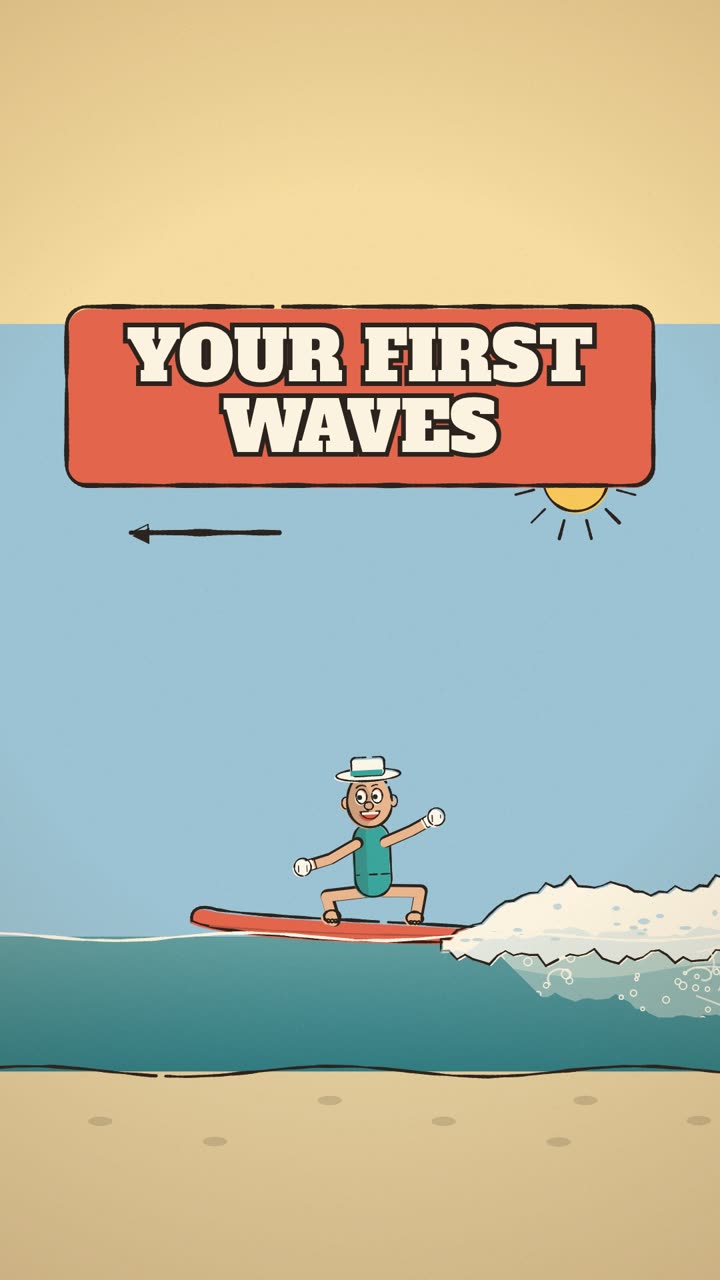
A green wave is one that hasn't broken yet. You catch it out the back, before it turns to foam, and ride its open face. It is faster and steeper than whitewater, so the timing changes: you paddle earlier, wait for the lift, and take a couple of extra strokes before you stand. Whitewater is the training wheels; this is the next step.
When you're ready for green waves
Move on when you can pop up and ride whitewater straight in most of the time, and you can paddle out past the breaking waves and sit on your board without tipping over. Our paddle-out guide covers getting out the back. Pick a small, gentle day, a soft-top or longboard, and a spot where the waves break slowly rather than pitching hard.
How to catch your first green wave
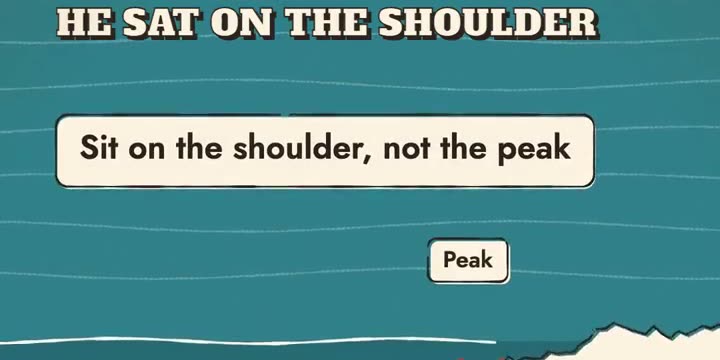
- Sit on the shoulder. The peak is where the wave breaks first and it is the steepest part. The shoulder, off to the side, is the gentler, unbroken part. Sit a little way out on the shoulder, away from the peak, and catch the wave there. Not too far: right out at the end of the shoulder the wave is often too soft to catch.
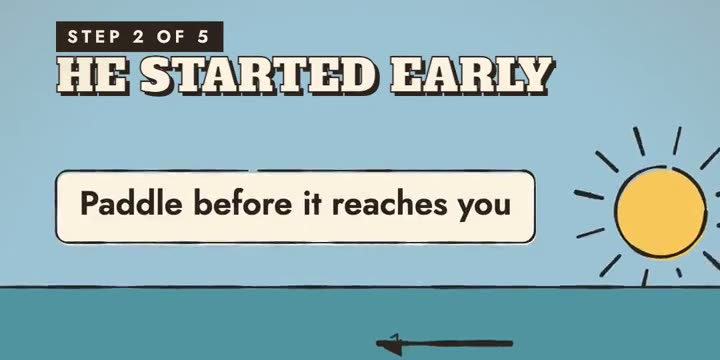
- Paddle early. Pick your wave while it is still a few board lengths away. Turn toward the beach and start paddling hard before it reaches you, so you're already moving when it arrives. An unbroken wave lifts and passes quickly, and if you start late it rolls under you without picking you up.
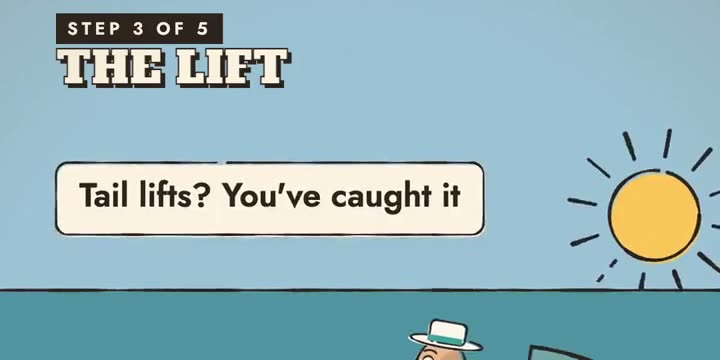
- Feel the lift. As the wave arrives, the tail lifts, the board tilts down the face and suddenly speeds up. That slide is the sign you've caught it.
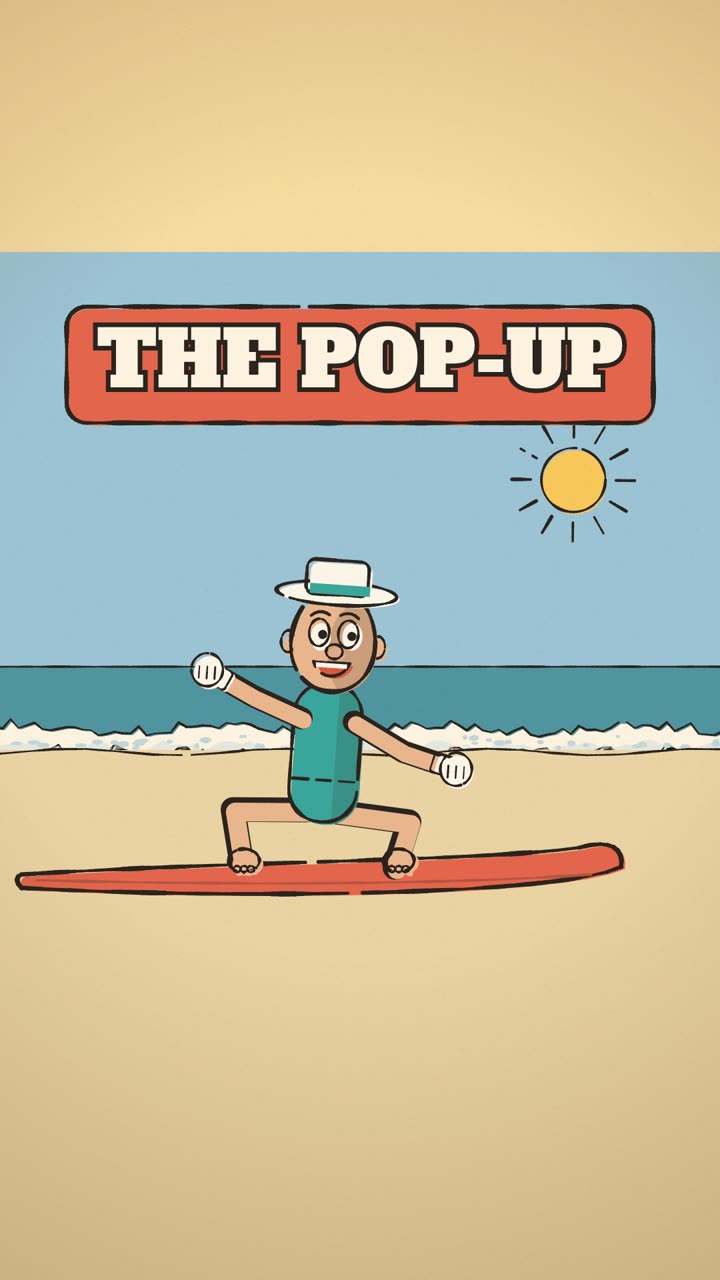
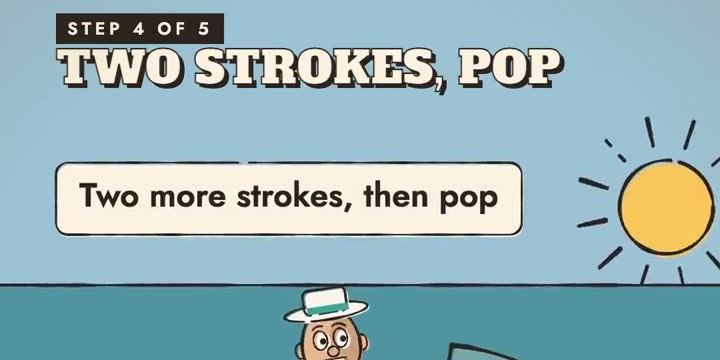
- Two more strokes, then pop. Don't pop up the moment the tail lifts. Take two more strong strokes to make sure the wave has you, then pop up and stay low.
- Angle along the face. Going straight to the beach is fine on your first few, but the breaking part catches up and you end up in the whitewater. Your next step is to angle along the face toward the shoulder, the way the wave is peeling, so you stay on the green part longer. Our angling guide takes you through it.
Right of way on the shoulder
Taking off on the shoulder is only fine when nobody is riding from the peak. The surfer closest to the peak has the right of way, and taking off in front of them is dropping in. Before you paddle, look toward the peak, and if someone is already up and riding or paddling for it, pull back. See right of way.
Common mistakes and fixes
- Sitting at the peak. It is steeper and more crowded. Start on the shoulder.
- Sitting too far out on the shoulder. The wave is too soft there to push you. Move a little closer to the peak.
- Paddling too late. Start when the wave is still a few board lengths behind you.
- Lying too far back. The tail drags and the wave passes under you. Slide forward a little so the board lies flat.
- Lying too far forward. The nose digs in and you go over the front. Move back until the nose is just above the water.
- Popping up as soon as the tail lifts. The wave hasn't got you yet and slips away. Two more strokes, then pop.
- Looking down. Look where you want to go, and the board will go there.
Land drill
Lie on a towel on the sand, or on your board with a hollow scooped out under the fins so they don't snap. Face away from the water, the way you would face the beach on a wave. Paddle slowly, and have a friend call "lift" at random moments. On "lift," take two more strong strokes, then pop up. This trains the timing in one smooth flow. Do 10 reps, rest and repeat. Work on the pop-up itself with the pop-up drill.
Safety note
- Wear your leash on your back ankle and look around before every wave so you're not riding toward someone.
- Paddle back out around the breaking part, not through the line where someone is riding.
- When you fall, fall flat or back, never head-first, since the water may be shallow; see how to wipe out.
- If you feel yourself being pulled out to sea, stay on your board and paddle parallel to the beach until you are out of the current, then head in; see rip currents.
In winter, SoCal often gets bigger west and northwest swells, so green waves may be too big for a first try. On those days, stay in the whitewater or wait for a smaller day. The water is about 57 to 62 °F, so wear a 4/3 mm wetsuit, and booties if your feet go numb. Cold makes you tired faster, so take breaks and leave while you still have energy.
FAQ
When should I start catching green waves?
When you can pop up and ride whitewater straight in most of the time, and paddle out past the breaking waves and sit on your board. Start on a small, gentle day on a soft-top or longboard.
Why do green waves keep passing under me?
Usually you started paddling too late or you're lying too far back. Start paddling while the wave is still a few board lengths away, lie with the nose just above the water and keep paddling until you feel the lift.
When do I pop up on a green wave?
Wait for the tail to lift and the board to slide down the face, take two more strong strokes, then pop up. Standing up the moment the tail lifts is the most common reason the wave slips away.
Where should a beginner sit to catch a green wave?
On the shoulder, a little way off to the side of the peak, where the wave is gentler. Only go if nobody closer to the peak is riding or paddling for it.