 Surfology
Home › Learn › Surf technique
Paddle out past the whitewater
Getting past the breaking waves, out the back, is often the hardest part of a session. Many beginners spend half their energy getting pushed back to the beach by line after line of whitewater. The fix is mostly planning, not strength: watch first, pick your route, then time your push.
How to get out the back, step by step
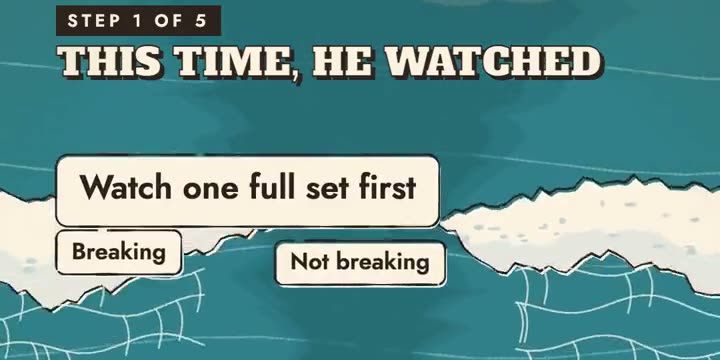
- Watch one full set first. Waves come in groups called sets, with calmer gaps between them called lulls. Stand on the beach and watch for a few minutes, long enough to see at least one full set. Notice where waves break and where they don't, how many waves are in a set and how long the lull lasts.
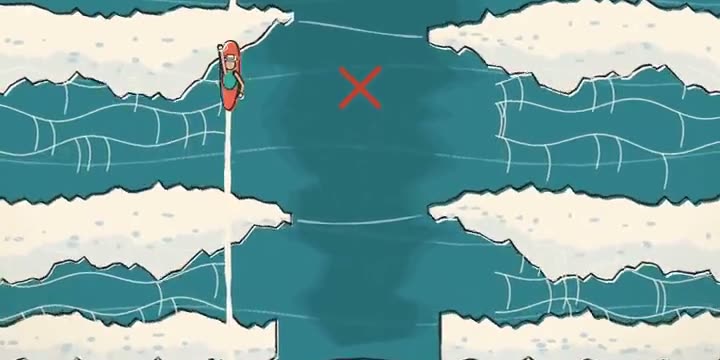
- Paddle beside the channel. A channel is a stretch where waves break less, often because the water is deeper, and it can look calm and dark. Paddle out a little to the side of it: smaller whitewater than at the peak, without the strongest pull.
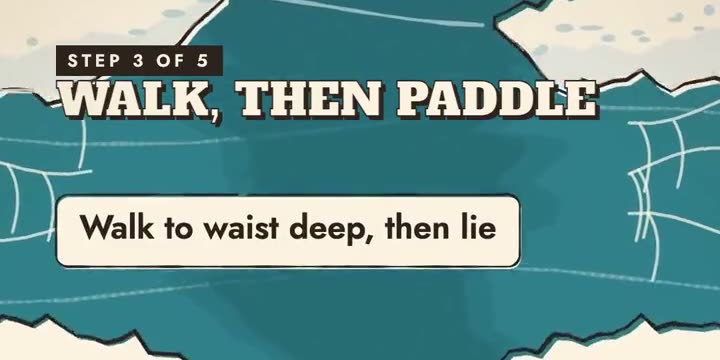
- Walk, then paddle. Walk out holding the board at your side with the nose pointing out to sea, so the foam hits the nose and not the side of the board. Keep the board beside you, never between you and an incoming wave, and shuffle your feet to warn off stingrays. When the water reaches your waist, lie down and start paddling.
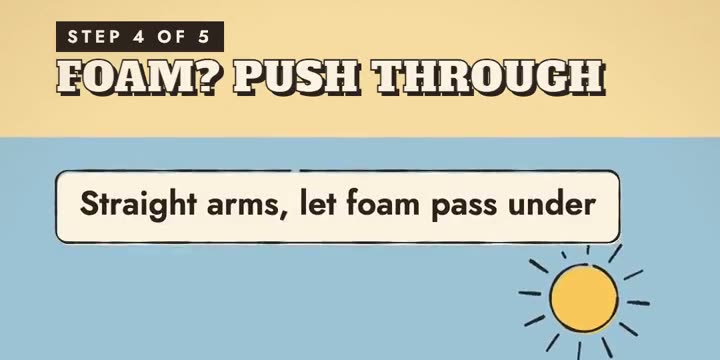
- Push through the foam. When a small line of whitewater comes, paddle at it straight on. Just before it hits, grab the rails by your chest and push up on straight arms, keeping your hips and legs on the board. The foam rushes between your chest and the board, and you go over the top. Then lie down and keep paddling right away.
- Keep paddling, sprint the lulls. When a set ends, paddle hard through the lull. Don't stop to rest in the impact zone, where waves break. Keep going until you're past the breaking line, then sit up and rest.
Beginner tip: The water that waves push toward the beach flows back out to sea through channels, so a channel is often a rip current. Experienced surfers who know the spot sometimes use that current to get out. Don't ride the rip out to save energy. Stay beside the channel, not in it, until you can read a rip and get out of one calmly. Keep checking the beach as you go, and if you feel yourself being pulled sideways or out, paddle parallel to the beach away from it.
Beginner tip: If you can't get out after a few honest tries, the waves may be too big for you that day. Stay in the whitewater and practice there. There is nothing wrong with that.
Bigger whitewater
The push-up works for small foam on most boards. For bigger whitewater, longboards and soft-tops use the turtle roll, where you flip upside down under the board and hold on, and smaller boards use the duck dive, where you push the board under the wave. Both take practice.
In winter, SoCal often gets bigger west and northwest swells, so you'll meet bigger foam more often. Until you know those moves, choose small days and spots that suit beginners.
Common mistakes and fixes
- Running straight in. Watch a full set first. Two minutes on the sand can save twenty in the foam.
- Paddling straight into the biggest peak. Go out where waves break less, beside the channel.
- Holding the board sideways to the foam. Keep the nose pointed straight at the waves so the foam can't grab the board and twist it.
- Stopping to rest in the impact zone. Rest only after you're past the breaking waves, or back in shallow water.
- Pushing up too early or too late. Push up just before the foam reaches the nose. Too early and you sink back down before it arrives. Too late and it hits your face.
- Letting go of the board. Hold on when paddling out. A loose board can hit you or someone behind you.
Land drill
Lie on your board on the sand. Paddle five slow, long strokes, then on a friend's call, grab the rails by your chest and push up on straight arms for two seconds, keeping your hips and legs on the board. Lie down and paddle again. Do 10 rounds. It builds the arm strength for the push-up and makes it automatic. Work on your stroke with the paddling guide.
Safety note
If you find yourself drifting out to sea or along the beach and can't paddle back, don't fight the current head on. Stay on your board, since it floats you, and paddle parallel to the beach until you're out of the pull, then head in at an angle. If you can't get out, wave one arm and call for help. Learn the signs first in rip currents.
Keep out of other surfers' path: if someone is riding a wave toward you, paddle toward the whitewater behind them, not into their path.
In winter, water is around 57 to 62 °F, so wear a 4/3 mm wetsuit and remember the days are short. Plan to be back on the beach before dark.
FAQ
Why can't I get past the whitewater when I paddle out?
Usually it is timing and position. Watch for the sets and lulls, paddle out beside the channel where fewer waves break, and sprint during the lull. Pushing up through small foam instead of letting it push you back also helps a lot.
What is a channel in surfing?
A channel is a deeper stretch where waves break less. Water flows back out to sea through it, so it often holds a rip current. Experienced surfers sometimes use it to get out; beginners should paddle out beside it, not in it.
How do I get through whitewater on a surfboard?
For small whitewater, paddle at it straight on and push up on straight arms so the foam passes under your chest. For bigger whitewater, longboarders use a turtle roll and shortboarders use a duck dive.
How long should I watch the waves before paddling out?
At least long enough to see one full set and the lull after it, often a few minutes. On bigger winter days, watch longer.