 Surfology
Home › Learn › Ocean and safety
How to spot a rip current, and what to do if one grabs you
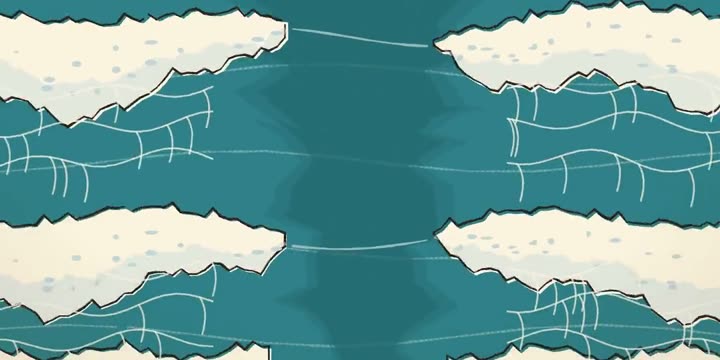
The calm, dark gap between the breaking waves looks like the easy way out. It is often a rip current: a narrow river of water running back out to sea. Learn to spot one from the sand, and you will know what to do if one pulls you out on your board.
What a rip current is
Waves push water up onto the beach. That water has to get back out somehow, and it tends to find the easiest path: a low spot or channel in the sandbar, a gap between sandbars, or the edge of a pier or jetty. The water drains back out through that channel, and that seaward flow is the rip.
Two things matter most. First, a rip pulls you out, not under. It will not drag you to the bottom. Second, most rips are narrow, often only tens of yards wide, though some are much wider, so you do not need to beat it. You only need to get out of it.
How to spot a rip from the sand
Rips can be hard to see, especially from beach level. Look from higher up if you can: the top of the sand, a lifeguard tower ramp, or a bluff. Then look for these clues.
- The gap. A calm, dark, flat lane where waves are not breaking, with white water breaking on either side. Darker usually means deeper.
- Foam and sand drifting out. Bits of foam, seaweed or sandy, murky water moving out past the waves instead of in.
- A rippled, choppy patch. A stretch of surface that looks bumpy or wind-ruffled while the water around it is lined up and smooth.
- A break in the lines. The rows of incoming waves look broken or bent where the rip runs through them.
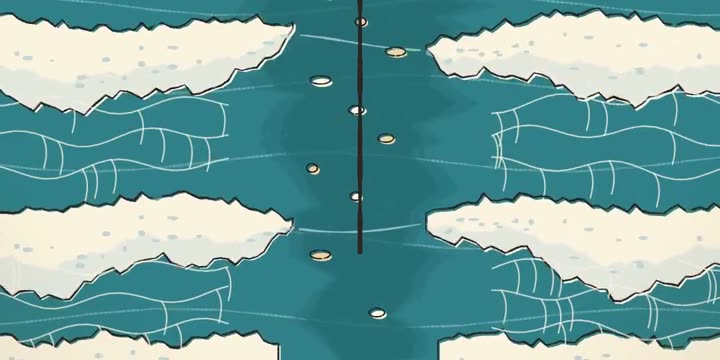
Rips move and change. Sandbars shift after big swells, and many rips get stronger as the tide drops and more water funnels through the channels. A rip that was not there this morning can be there this afternoon.
Beach drill: find the rip before you paddle out
Do this every session, from the sand, before you get wet.
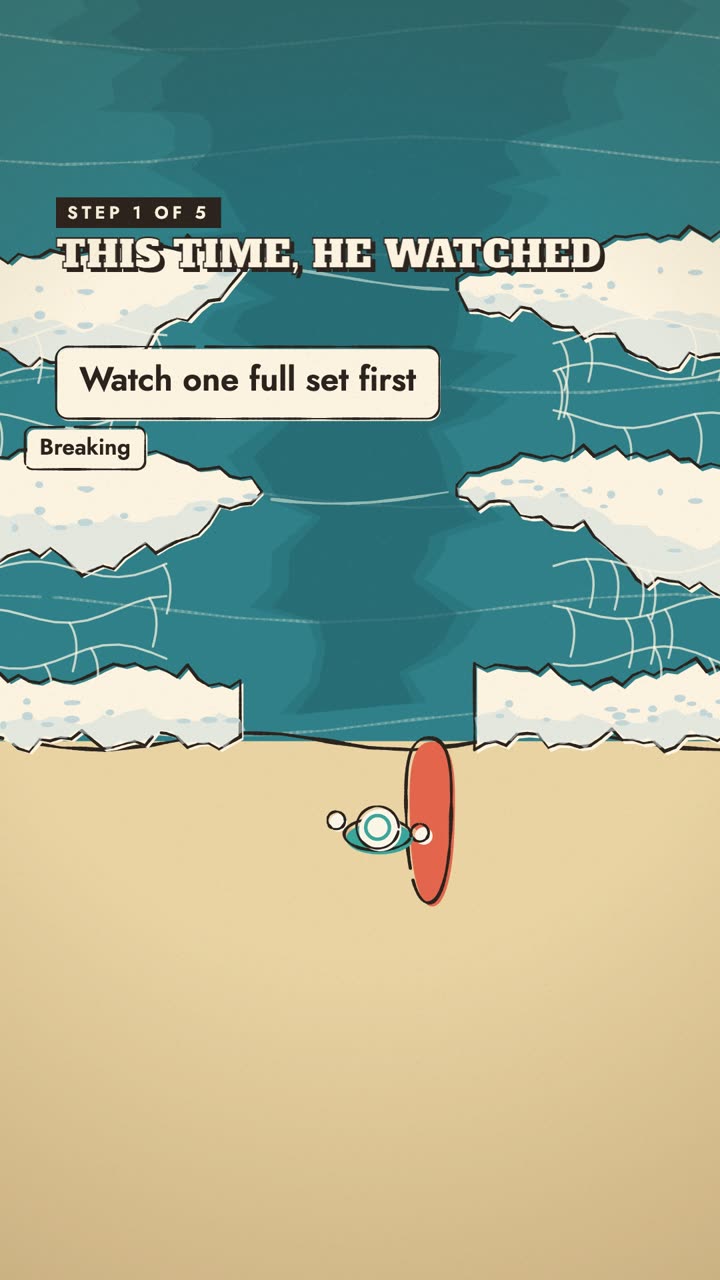
- Stand on the high part of the beach and watch for 10 to 15 minutes. Rips do not always show on the first look, and sets come and go.
- Find where waves are breaking and where they are not. Note any dark, flat lanes.
- Watch a piece of foam or seaweed. Does it drift in toward the sand, or out?
- Pick a landmark on the sand (a tower, a trash can, a sign) in line with any rip you see.
- Walk to the lifeguard tower and ask: "Where are the rips today?" Lifeguards watch this water all day. It is the best question you can ask.
Beginner tip: Set up well away from any rip you spot, and away from piers and jetties, where rips like to sit. Experienced surfers sometimes use a rip as a conveyor belt to paddle out. That is not a beginner move.
Caught in a rip? What to do on your board
You will know because you are paddling toward the beach and the beach is not getting closer, or you are drifting out past the waves without trying to.
- Stay on your board. Your board floats you. Keep your leash on and lie on it, or sit on it and rest.
- Don't panic, and don't fight it. Paddling straight back to shore against a rip wears out even strong surfers. Breathe and take stock.
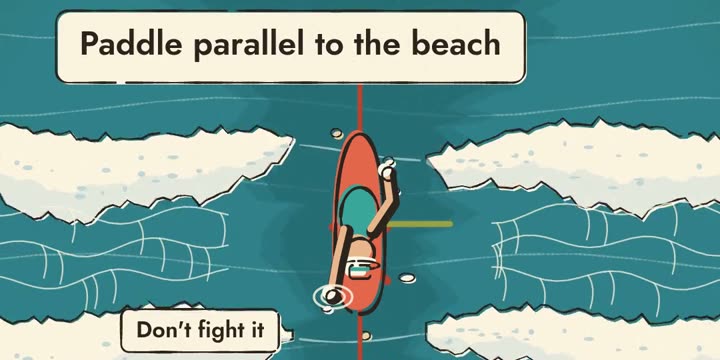
- Paddle parallel to the beach. Paddle sideways, along the shoreline, toward where the waves are breaking. Once the pull eases, you are out of it.
- Ride the foam back in. Angle back toward the beach and let the whitewater push you in. That breaking water is moving toward shore.
- If you can't get out, float and let it carry you. Many rips weaken just past the waves, and some circle back toward the sandbar. Stay calm on your board, save your energy, and once the pull eases, paddle parallel to the beach again before you head in.
- Signal for help. If you are tired or stuck, face the beach, wave one arm high and call out. Lifeguards know the signal.
Common mistakes and fixes
- Mistake: paddling straight at the beach. Fix: go sideways first, then in.
- Mistake: ditching the board to swim. Fix: the board is your life jacket. Stay with it.
- Mistake: choosing the calm patch because it looks easy. Fix: calm and dark between breaking waves is a warning, not an invitation.
- Mistake: checking once and paddling out. Fix: watch for 10 to 15 minutes and ask the lifeguard.
- Mistake: swimming in to help someone in trouble. Fix: alert a lifeguard or call 911. If you are already out there on your board, paddle over and let them hold the board, but don't get pulled into a rescue you can't finish.
Safety note
Winter in SoCal raises the stakes. November through March brings bigger northwest swells, and more water breaking means stronger rips. The water is about 57 to 62 °F, so you tire faster. Wear a 4/3 wetsuit, which keeps you warm and adds a little float. Days are short, and many towers are empty in the off-season or close before sunset. Surf near a staffed tower, check its hours, and go with a buddy. If you are unsure about the conditions, don't paddle out.
FAQ
What does a rip current look like from the beach?
Usually a calm, darker lane of water where waves are not breaking, with breaking waves on both sides. You may also see foam, seaweed or sandy water drifting out to sea, and a choppy, rippled patch on an otherwise smooth surface.
Can a rip current pull you under?
No. A rip pulls you out, away from the beach, not down. People get into trouble from panic and exhaustion while fighting the current, which is why the advice is to stay calm, float and not swim against it.
Which way do you swim or paddle to get out of a rip?
Parallel to the shoreline, out of the current, then angle back to the beach through the breaking waves. If you can't break free, float or stay on your board, let the current carry you until it eases, and wave and call for help.
Are rip currents worse at low tide?
Often, yes. As the tide drops, more of the returning water is squeezed through the channels in the sandbar, so many rips get stronger. Bigger swell makes them stronger too. Ask the lifeguard what the rips are doing today.