 Surfology
Home › Learn › Ocean and safety
How tides affect surfing
You surf a spot at 7 a.m. and it is perfect. You come back at 11 a.m. and it is barely breaking. Nothing changed with the swell. The tide did. Low and high tide reshape the same wave over the same bottom, and once you can read a tide chart, you can plan for it.
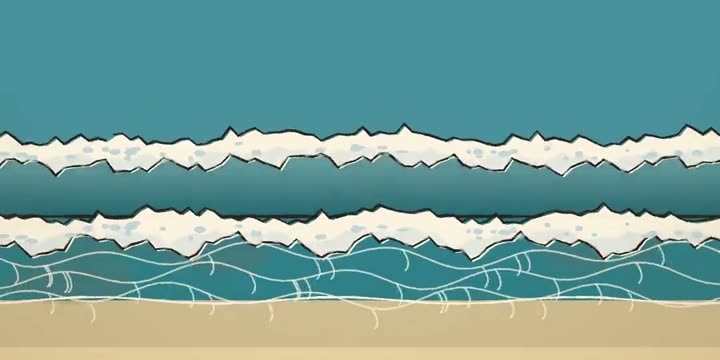
Two highs and two lows a day
The moon and sun pull on the ocean, and as the Earth turns, the water level along the coast rises and falls. Most SoCal beaches get two high tides and two low tides a day, roughly six hours apart. The pattern slides later by about 50 minutes each day, so if low tide was at 4 a.m. today, it will be close to 5 a.m. tomorrow.
In SoCal the two highs are usually not the same height, and neither are the two lows. One day might have a big swing from a very low low to a high high, and a small swing later. On a big swing the water moves fast, so a spot can change within a single session.
Low tide: harder, shallower, rocks show
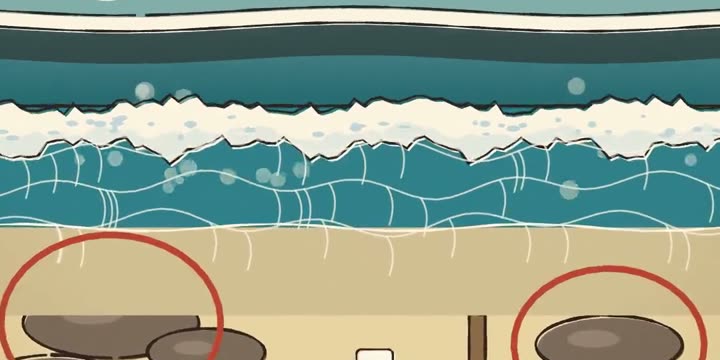
When the water drops, the same wave breaks over shallower bottom. It tends to stand up faster and break harder and hollower. Rocks, reef and cobbles that hide at high tide sit at or just under the surface. At some beach breaks, very low tide makes waves dump straight onto the sandbar or close out.
Low tide also changes currents. With less water over the sandbar, the returning water squeezes through the channels, so rips can get stronger. See our rip current guide.
High tide: softer, can go mushy
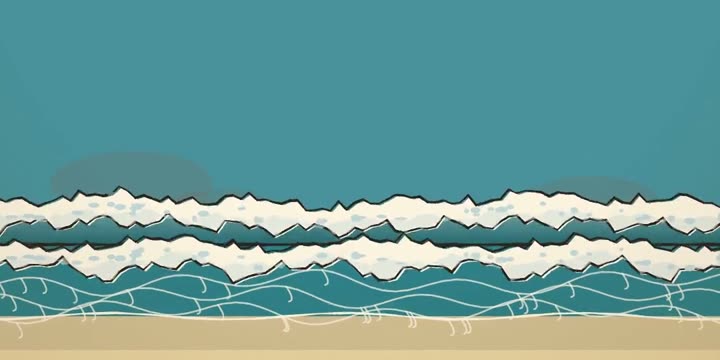
When the water rises, there is more depth over the bottom, so waves have room to roll in without breaking hard. They get softer and slower, and at some spots they stop breaking at all. At steep beaches, high tide can also bring backwash and a heavy shorebreak right on the sand.
Beginner tip: A slightly fuller tide is often friendlier for learning: softer whitewater, fewer exposed rocks. But if there is no dry sand left and the waves are slamming the beach, wait for the tide to drop toward mid.
The mid-tide sweet spot
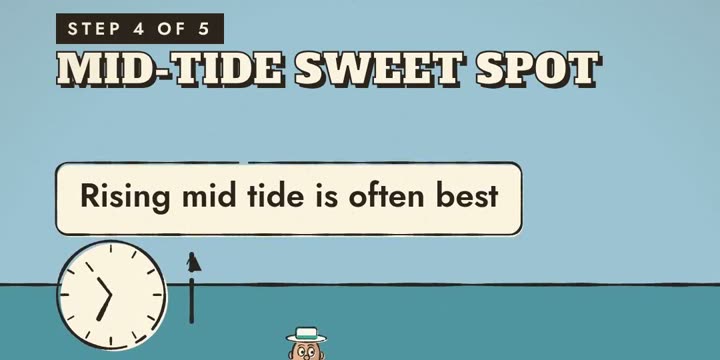
Many beaches are at their best on a rising mid tide, in the hours between low and high as the water comes in. There is enough depth to keep the waves from dumping, and the incoming push often helps them line up and peel. That is a pattern, not a rule. Every spot has its own favorite tide, and locals know it. Ask, and keep notes on your own sessions.
Land drill: read a tide chart in two minutes
Do this the night before, or in the car.
- Open a tide table or app for the station nearest your beach.
- Write down today's two lows and two highs, with times and heights. Heights are in feet above the average of the daily lower low tides (MLLW), so a minus number means an extra-low tide.
- Draw a quick curve: up to each high, down to each low.
- Mark the rising mid-tide window, roughly the middle third of the climb from a low to the next high.
- Check the size of the swing. A big swing means the water moves fast and the spot can change quickly.
- Plan your session around your window, and check that the low is not so low that rocks will be out.
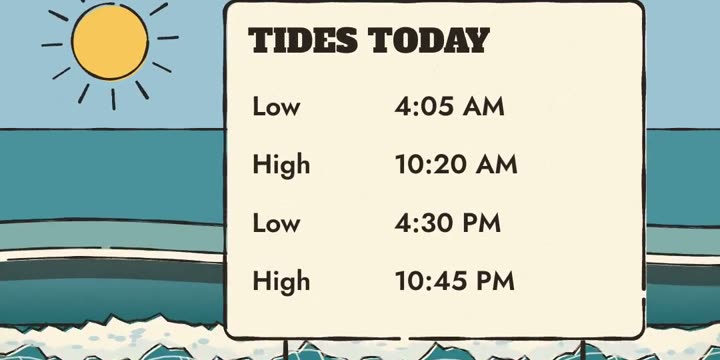
Winter tides in SoCal
From November to March, SoCal's lowest tides of the year, the minus tides, tend to fall in the afternoon and early evening, while the highest highs come in the morning.
The extra-high king tides show up around the new and full moon in winter. This winter (2026-27), the king tides fall around Nov 24 to 26 and Dec 23 to 25. On a king-tide high, the beach can disappear and waves can break right onto the sand, the rocks or the seawall, so check the morning high before you plan an early session.
On a winter minus tide, reefs and cobbles that are usually covered come out, and it often lands close to sunset, so watch both the tide and the light. Add bigger northwest swells and 57 to 62 °F water, and the tide matters even more. Wear a 4/3 and plan your exit before the light goes.
Common mistakes and fixes
- Mistake: checking the swell but not the tide. Fix: check both. The tide can make or break the same swell.
- Mistake: assuming every beach likes the same tide. Fix: learn each spot's best tide by asking and by keeping a log.
- Mistake: paddling out at a minus tide over reef or rocks. Fix: pick a sandy beach or wait for the water to come up.
- Mistake: using a tide station far from your beach. Fix: choose the nearest station. Times can differ along the coast.
Safety note
Rocks show and rips strengthen at low tide. High tide can trap you against cliffs or seawalls with no dry sand to walk out on. Know when the tide turns, know your exit, and ask the lifeguard how the tide is affecting today's surf.
FAQ
Is it better to surf at high tide or low tide?
It depends on the spot. Many beaches work best on a rising mid tide. Low tide tends to make waves harder and hollower and can expose rocks. High tide tends to make them softer and can turn them mushy or stop them breaking.
How often do tides change?
Most SoCal beaches have two high tides and two low tides a day, roughly six hours apart. The times move later by about 50 minutes each day.
What does a minus tide mean?
The water drops below the average low level used as zero on the chart. Rocks, reef and tide pools that are usually covered are exposed, and some spots get shallow and dangerous to surf.
Why did the waves disappear when the tide came in?
More water over the sandbar or reef means the waves do not feel the bottom enough to break. They roll through softly, or not at all, until the tide drops again.