 Surfology
Home › Learn › Surf technique
The parts of a wave, and which ones to ride
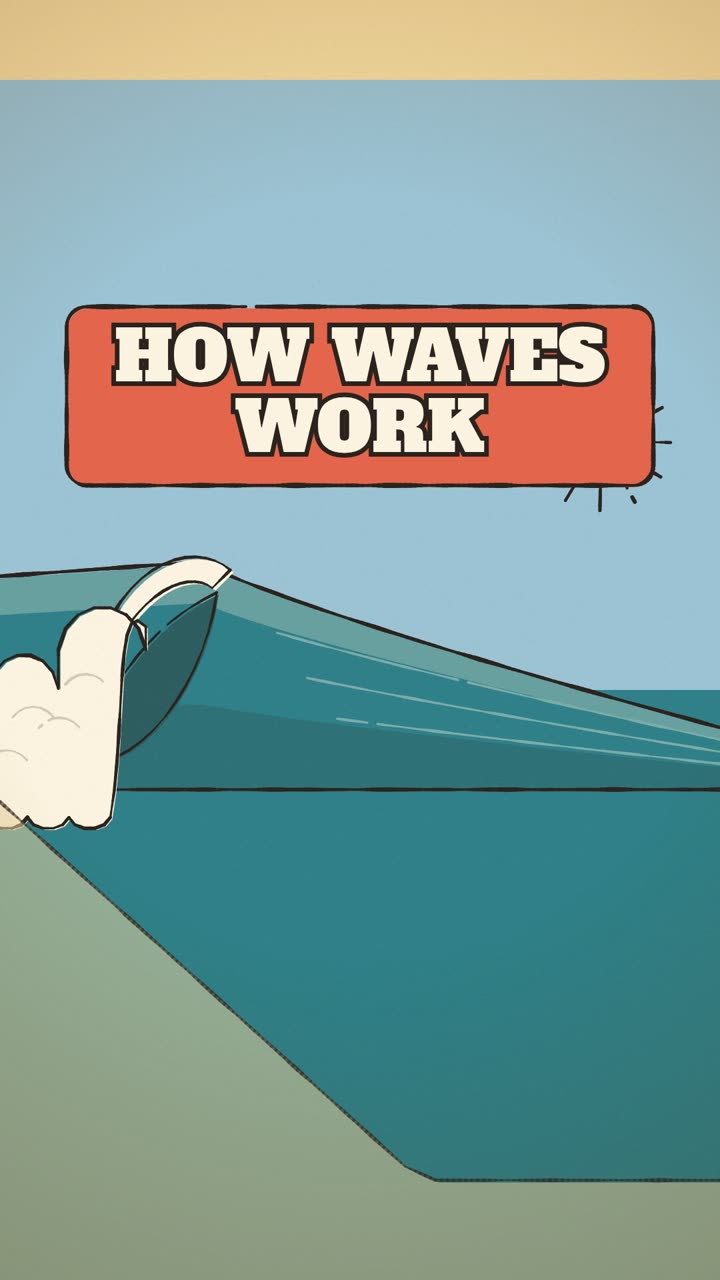
Peak, shoulder, lip, pocket, whitewater, closeout: surfers have a name for every part of a wave, and you will hear them in the lineup, in lessons and in surf reports. Knowing them helps you pick the right waves, sit in the right place and stay out of trouble.
Face, crest and trough
Three basic words first:
- Face: the unbroken wall of the wave you ride across.
- Crest: the top of the wave before it breaks.
- Trough: the low water at the bottom, in front of the wave.
The peak
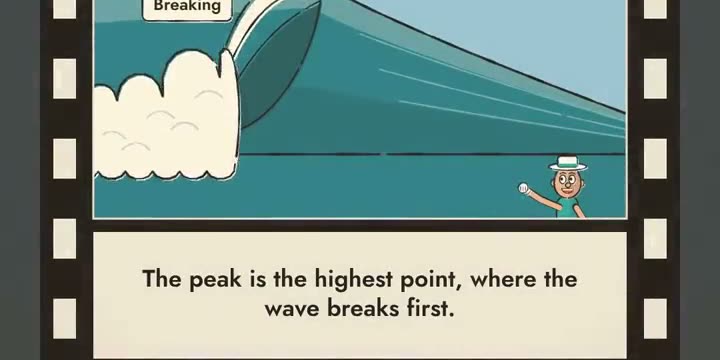
The peak is the highest point of the wave, and it is where the wave breaks first. Swell rises over the shallowest spot on the bottom, like a sandbar or reef, so the peak usually shows up in the same area wave after wave. That is why surfers gather there.
The peak is also where right of way starts. The surfer closest to the breaking peak has the wave. See our right of way guide.
The shoulder
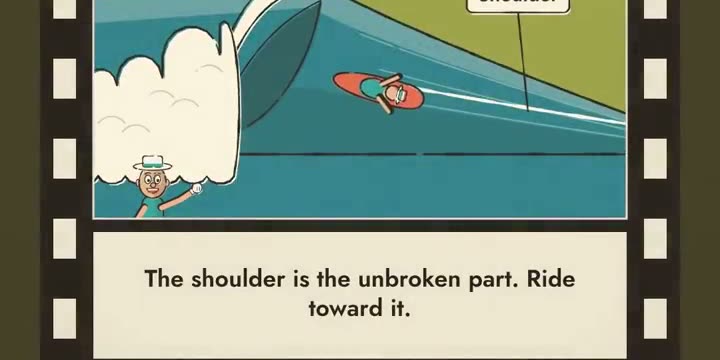
The shoulder is the unbroken part of the wave, off to the side of the peak, sloping down to a lower end. As the wave breaks, the breaking part moves along it. Your job on a green wave is to ride toward the shoulder, staying just ahead of the breaking part.
Rights and lefts are named from the surfer's view, riding toward the beach. If the wave peels to the surfer's right, it is a right. If it peels to their left, it is a left. From the sand it looks backward: a right peels toward your left.
Beginner tip: When you start catching green waves, sit a little out on the shoulder, away from the peak. The wave is softer there, and you are out of the way of surfers taking off at the peak.
The lip and the pocket
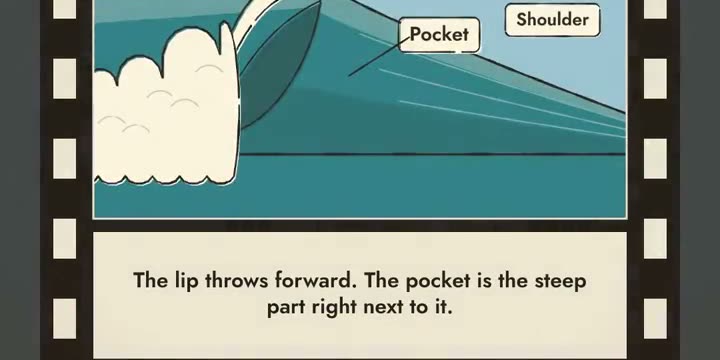
The lip is the top edge of the wave that throws forward as it breaks. On a steep wave it pitches out over a hollow. The lip is heavy. Getting hit by it, or landing under it, is how many wipeouts hurt.
The pocket is the steep part of the face right next to the curl. It is where the wave has the most power and speed, which is why good surfers try to stay close to it. For beginners, it is also the part most likely to pitch you off.
Whitewater
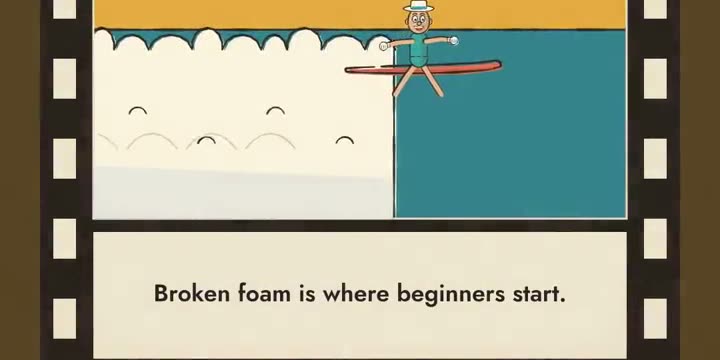
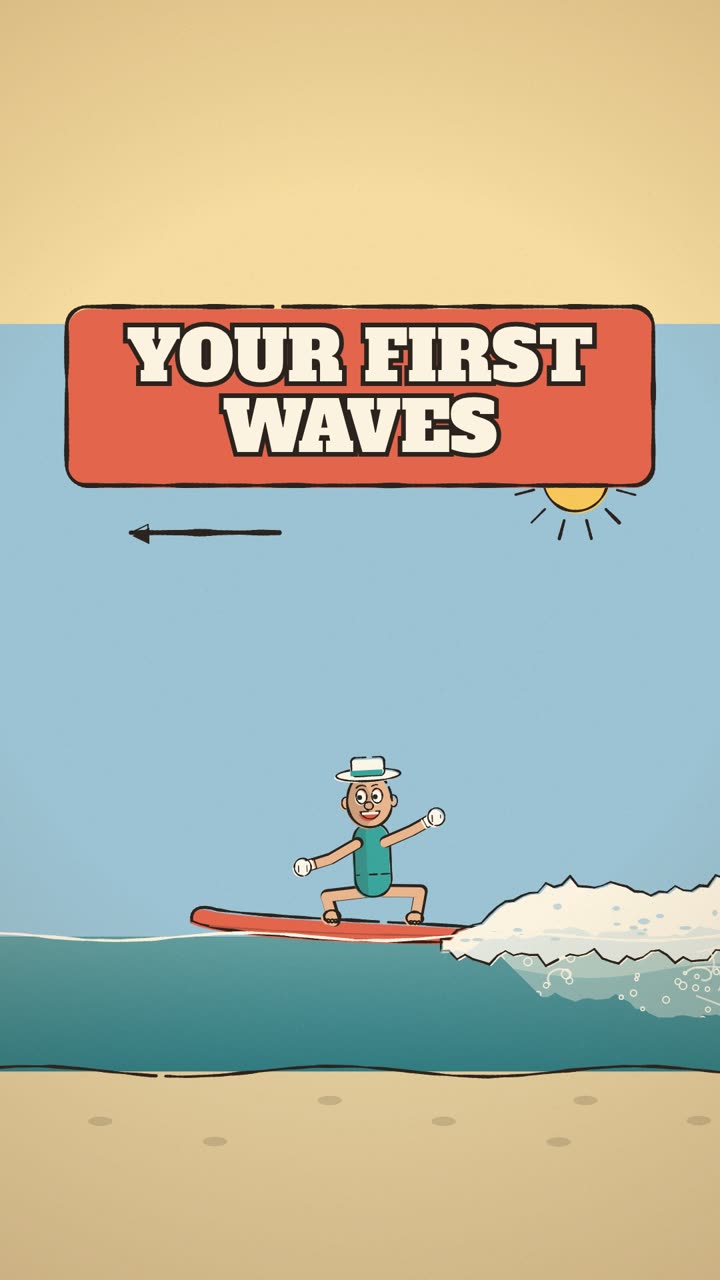
Whitewater, or foam, is the wave after it breaks. It rolls straight toward the beach and pushes you with it, so you can practice catching waves and popping up without needing to angle or turn. Every surfer starts here.
Beginner tip: Learn in waist-deep whitewater on a sandy beach, near a lifeguard, with plenty of space around you. Ride straight in and leave room for the people around you.
Closeouts
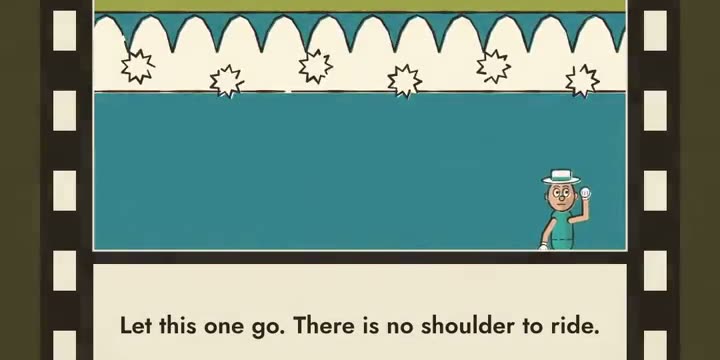
A closeout is a wave that breaks all at once, along its whole length, so there is no shoulder to ride. You take off, and the whole wall comes down on you. Closeouts are common at beach breaks with very straight sandbars, on very low tides and on big winter swells.
Let them go. Wait for a wave that breaks bit by bit, from the peak toward the shoulder.
Beach drill: name the parts from the sand
Spend 10 minutes on the sand before you paddle out.
- Watch a set roll in. Point at the spot where each wave breaks first. That is the peak.
- Watch which way the breaking part moves. Say "right" or "left" from the surfer's view.
- Find the shoulder and watch where surfers end their rides.
- Count how many waves close out and how many peel. If most close out, it is not a good day to try green waves.
- Look for where the whitewater rolls in gently and where the rips sit. See our rip current guide.
Common mistakes and fixes
- Mistake: paddling for the biggest, steepest part. Fix: take off a little toward the shoulder until you can handle the pocket, but only when nobody closer to the peak is going for it.
- Mistake: going straight down the face on a green wave. Fix: look and lean toward the shoulder as you stand.
- Mistake: going for closeouts. Fix: let them pass and wait for a wave with a shoulder.
- Mistake: sitting right where the lip lands. Fix: sit slightly wide of the peak so a set does not land on your head.
Safety note
Winter in SoCal brings bigger northwest swell, more closeouts at beach breaks and heavier lips. The water is about 57 to 62 °F, so a 4/3 wetsuit is standard. On big days, beginners belong in the whitewater close to shore or on the sand watching. If you get caught under a lip, cover your head with your arms and come up slowly; see how to wipe out.
FAQ
What is the shoulder of a wave?
The shoulder is the unbroken, sloping part of a wave beside the breaking peak. You ride toward it, staying just ahead of the whitewater.
What is the pocket in surfing?
The pocket is the steepest part of the wave face, right next to the breaking curl. It has the most power and speed, which makes it the best part to ride once you have the skill.
What is a closeout wave?
A closeout breaks all at once along its whole length, so there is no open shoulder to ride. Most surfers let closeouts pass and wait for a wave that peels.
How do you tell a left from a right?
It is named from the surfer's point of view while riding toward the beach. A right breaks to the surfer's right. From the beach, that same wave looks like it is peeling to your left.