 Surfology
Home › Learn › Ocean and safety
How waves are made
The wave you catch may have started as wind over a storm thousands of miles away. It rolls across the ocean until the sea floor trips it near the beach. Know that journey and you can read a forecast and pick a safer day.
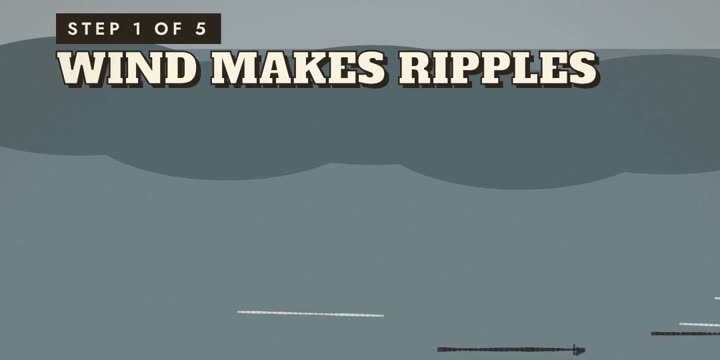
1. Wind makes ripples
Wind blowing across flat water drags on the surface and rubs up tiny ripples. Those ripples give the wind something to push against, so they catch more wind and grow. Every wave you surf starts this way.
2. More wind, more wave
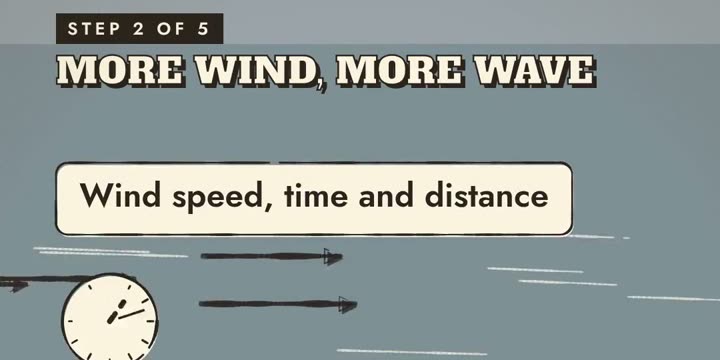
Three things decide how big the waves get:
- Wind speed. Stronger wind puts in more energy.
- Time. The longer it blows, the more the waves build.
- Distance. The longer the stretch of open sea the wind blows over, called the fetch, the bigger the waves can grow.
Get a lot of all three, like a big winter storm in the North Pacific, and you get big, powerful swell. A local afternoon breeze makes small, choppy wind waves instead.
3. The energy travels, the water stays put
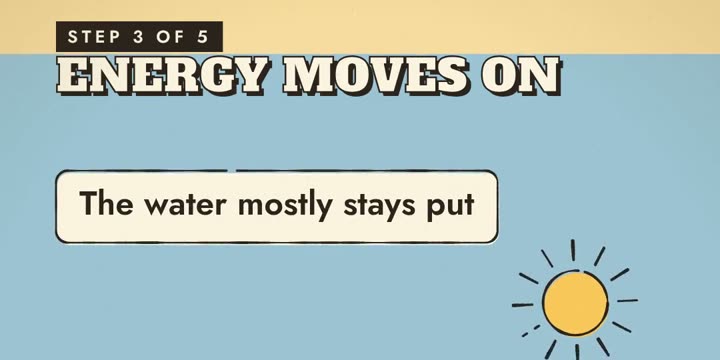
As a wave passes, the water itself mostly goes up and around in a circle and ends up nearly where it started. A duck or a surfer sitting outside bobs up and down while the swell rolls under. What travels across the ocean is the energy, not the water.
Out in deep water, waves sort themselves out. The longer waves travel faster, so they pull ahead of the short, messy ones. By the time they reach the coast, they arrive as clean, evenly spaced lines called swell. The time between two waves is the period. A longer period means the wave carries more energy and reaches deeper below the surface, so it feels the bottom sooner and hits harder when it breaks.
4. They cross the ocean
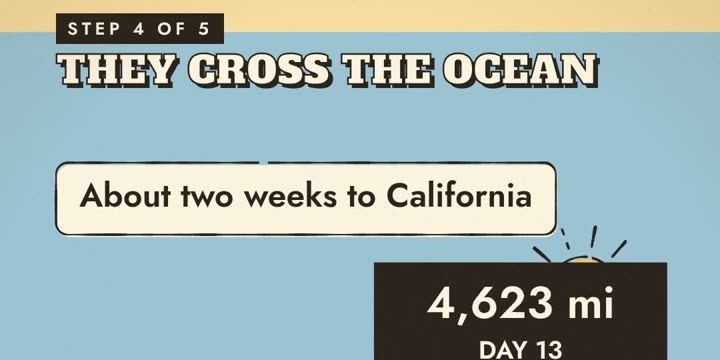
Swell can travel thousands of miles with very little loss. Summer south swells from storms deep in the Southern Hemisphere can travel around 5,000 miles to reach California. The long-period waves at the front of a big south swell often make it in a week or so, and the shorter, slower waves trail in after, so the whole trip can take up to about two weeks. Winter northwest swells come from storms in the North Pacific, much closer, and usually show up a few days after the storm.
That is why forecasters can see a swell coming days ahead. The direction it comes from decides which beaches face it and get waves, and which ones stay small.
5. The bottom trips them
When swell reaches shallower water, the bottom starts to slow the base of the wave. The waves bunch up, get taller and steeper, and finally the top outruns the bottom and the wave breaks. As a rule of thumb, a wave breaks when the water is only a little deeper than the wave is tall.
The shape of the bottom shapes the wave. A gentle, sloping sandy bottom makes slow, crumbling waves that are good for learning. A sudden, steep rise, like a reef or a steep sandbar, makes the lip throw out over a hollow, which is fast and powerful. The bottom is also why waves break in one spot and not another, and why the tide changes everything. See our guide to tides.
Beach drill: time the swell
Next time you are at the beach, try this.
- Pick a fixed point, like a buoy, a rock or the end of a pier.
- Count the seconds between one wave crest passing it and the next. Do it for five or six waves and average them. That is a rough period.
- Long gaps, say 12 seconds or more, mean groundswell from far away: cleaner lines and more push.
- Short gaps, under about 8 seconds, mean local wind swell: bumpier and weaker.
- Watch where the waves break first. That is shallow bottom, often a sandbar or reef.
Beginner tip: Long-period winter swell can look small from the beach, then send a much bigger set. If the lines are far apart, watch for 15 minutes before you paddle out, and stay in the whitewater on the inside.
Common mistakes and fixes
- Mistake: looking only at wave height in the forecast. Fix: check the period and direction too. A 3-foot swell at 16 seconds can surf much bigger than 3 feet at 7 seconds.
- Mistake: judging the day from one look. Fix: swell comes in sets. Watch several sets before you decide.
Safety note
Winter brings the biggest swell of the year to SoCal. Bigger, longer-period waves break farther out, hit harder and make stronger currents. With water around 57 to 62 °F, wear a 4/3 wetsuit. If the forecast shows a big northwest swell, pick a smaller, sheltered spot or watch from the sand, and ask the lifeguard. Long-period sets can also surge farther up the beach than you expect, so keep your things and yourself back from the waterline. See our rip current guide before a big day.
FAQ
How are ocean waves formed?
Wind blowing across the sea drags on the surface and builds ripples, then bigger waves. Their size depends on how strong the wind is, how long it blows and how much open water it blows across.
How far do ocean waves travel?
Swell can cross entire oceans. Waves from Southern Hemisphere storms can travel around 5,000 miles to reach California, a trip of a week or more, while winter northwest swells come from North Pacific storms only a few days away.
Does the water move with a wave?
Mostly no. The water moves in a circle and ends up almost where it started. What travels forward is the energy. Water only rushes forward when the wave breaks and turns into whitewater.
Why do waves break?
When a wave reaches shallow water, the bottom slows its base while the top keeps going. The wave gets steeper until the top tips over and breaks.