 Surfology
Home › Learn › Ocean and safety
Surf etiquette: who has the right of way
Surf etiquette is not about being cool. It is a short list of rules that keeps people from getting hurt and keeps the lineup friendly. Break them and you will get yelled at, or worse, hit someone. Learn these five before you paddle out.
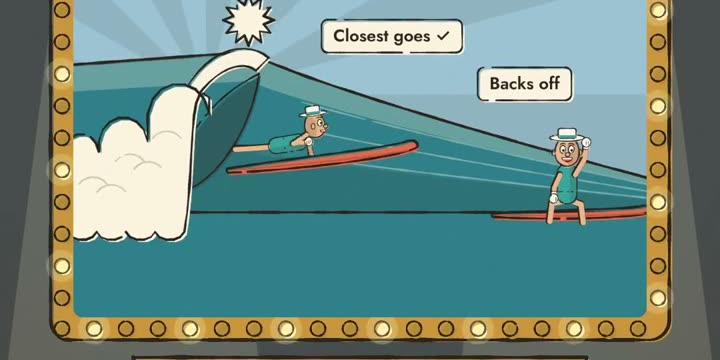
1. Closest to the peak goes
On an unbroken wave, the surfer closest to the breaking part, the peak, has priority. Everyone farther out on the shoulder backs off and lets them go. See our anatomy of a wave guide if peak and shoulder are new words.
Some peaks break both ways, left and right. Then two surfers can share it, one going each way. Call it out ("Going left!") so the other person knows.
Before you paddle for any wave, look toward the peak. If someone closer is paddling or already up, it is theirs.
2. Don't drop in
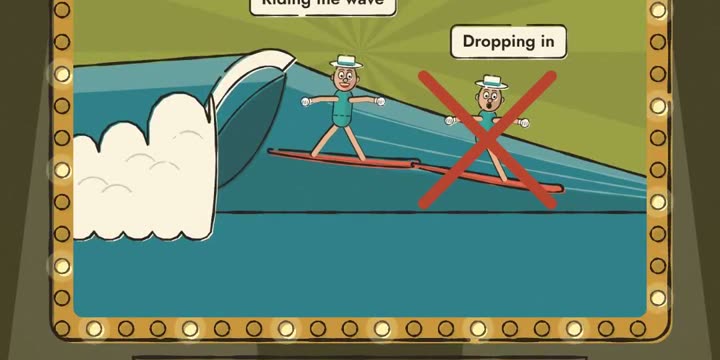
Dropping in means taking off in front of someone who is already riding the wave. It is the biggest sin in surfing, and it is how people collide.
- Look both ways before you commit, especially toward the peak.
- Someone already up? Pull back. Stop paddling, sit up or roll off the back.
- If you drop in by mistake, kick out of the wave right away and say sorry. Everyone does it once. Owning it goes a long way.
3. Don't snake
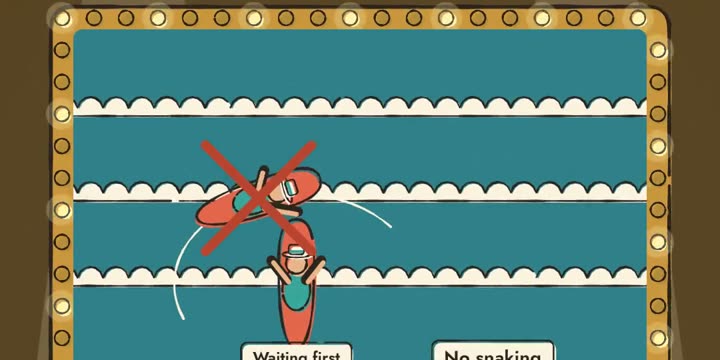
Snaking is paddling around someone who was waiting first, so you end up on the inside, closer to the peak, and steal their wave. It is technically "closest to the peak," but it breaks the spirit of the rule. Waves are shared in turns. Take your place in the rotation and wait.
Hogging is the cousin of snaking. Even if you can catch every wave, don't. Let others have theirs.
4. Paddle wide
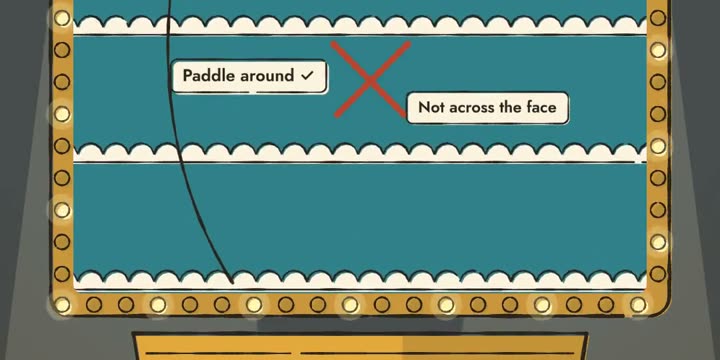
When you paddle back out, stay out of the way of people riding. Go around the breaking area, through the whitewater or beside the channel where waves are not breaking, not straight across the face where someone is surfing. Channels often hold a rip current, so beginners should stay beside them, not in the middle; see rip currents.
If a surfer is riding toward you and you are caught in their path, paddle toward the whitewater, behind them, not toward the shoulder where they are heading. Take the hit from the foam. That gives them a clear line in front of you.
5. Hold your board
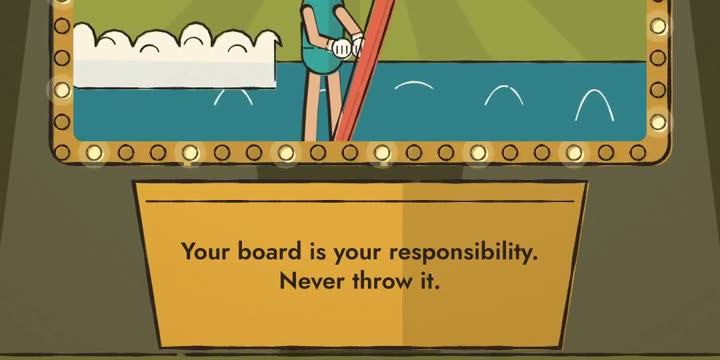
Your board is your responsibility. A thrown board can hit someone behind you hard, even with a leash. When a wave comes at you, hold on if you can do it safely: grip the rails, or turtle roll or duck dive if you know how. Always check your leash before you paddle out.
Beginner tip: In the whitewater, you usually can't hold a big foam board through every wave. Leave plenty of space around you, at least a few board lengths, so a loose board can't reach anyone. Push the board to the side and away from you as you fall, never toward a person.
Beach drill: read the lineup before you paddle out
- From the sand, watch for 10 minutes. Find the peak and see where surfers sit.
- Count the people on the main peak. If it is packed, look for an empty peak down the beach.
- Find the channel, where waves are not breaking, and watch where experienced surfers paddle out. Plan your route beside the channel, away from people riding. The channel itself is often a rip.
- Watch the rotation. Notice who catches waves and who waits.
- Pick your spot: as a beginner, the inside whitewater or a quiet shoulder, not the main peak.
Common mistakes and fixes
- Mistake: paddling for a wave without looking at the peak. Fix: look first, every time.
- Mistake: paddling straight back out through the surf zone. Fix: go wide, through the whitewater or beside the channel.
- Mistake: sitting in the middle of the main peak as a beginner. Fix: start on the inside or on the shoulder of a smaller peak.
- Mistake: ditching your board to dive under waves. Fix: hold on, or keep enough space that it can't hit anyone.
- Mistake: getting defensive after dropping in. Fix: kick out and say sorry.
Safety note
Winter in SoCal brings bigger northwest swells. Bigger waves mean more loose boards, faster rides and harder collisions. On a big day, give everyone more space, stay on the inside or watch from the sand, and wear a 4/3 wetsuit in the 57 to 62 °F water. If a collision does happen, check the other person is OK before anything else.
FAQ
Who has the right of way in surfing?
The surfer closest to the breaking peak of the wave. Anyone farther out on the shoulder should back off and let them ride.
What does dropping in mean in surfing?
Dropping in is taking off on a wave in front of someone who is already riding it. It cuts them off and can cause a collision. If you do it by mistake, kick out right away and apologize.
What is snaking in surfing?
Snaking is paddling around someone who was waiting first so you are on the inside, closer to the peak, and can take their wave. It breaks the turn-taking that keeps lineups fair.
How do you paddle out without getting in the way?
Paddle out wide, through the whitewater or beside a channel where waves are not breaking, not across the face where people are riding. If someone rides toward you, paddle toward the whitewater behind them so they can pass in front.