 Surfology
Home › Learn › Surf technique
How to paddle a surfboard
Surfers like to say paddling is 90% of surfing. Count the sitting and waiting and it is less, but paddling is easily most of the work, and riding is only a small slice. If your paddling is weak, you get tired before the good waves come and you miss the ones you go for. These five fixes make every stroke count, from the first paddle out to the last wave in.
Five ways to paddle better
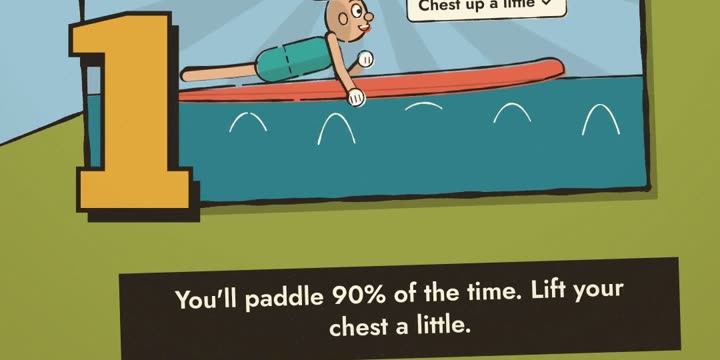
- Chest up a little. Lie on the board with your weight centered so the nose sits just above the water, an inch or two. Then lift your chest slightly by arching your upper back. Your head comes up so you can see where you're going, and your arms get a deeper reach. Don't press up like a push-up; a small lift is enough.
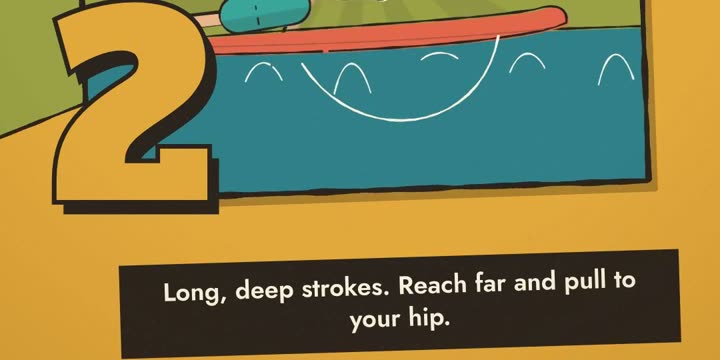
- Long, deep strokes. Reach forward as far as is comfortable, put your hand in the water close to the rail, and pull straight back along the rail, slightly under it, to your hip. The power is in the middle of the stroke, under your chest. Short, splashy strokes waste energy.
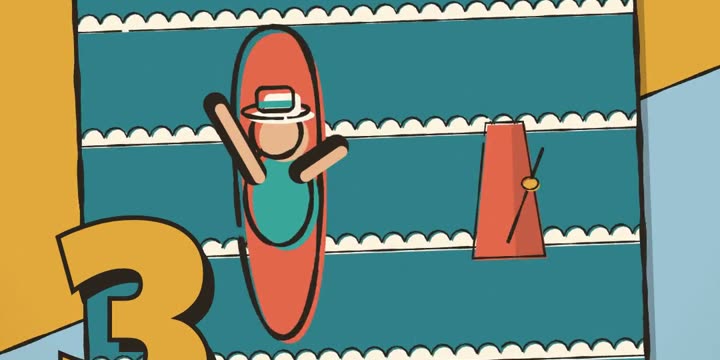
- Alternate your arms. Left, right, left, with a steady rhythm, like a slow freestyle swim. One arm is always pulling, so the board keeps moving. Paddling with both arms at once makes the board surge and stop.
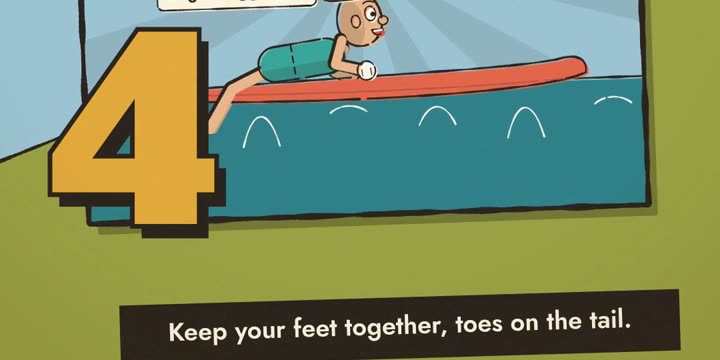
- Feet together. Keep your legs together and resting on the board, toes near the tail, not hanging off the sides into the water. Dragging legs act like brakes and make the board wobble. Don't kick; your arms do the work.
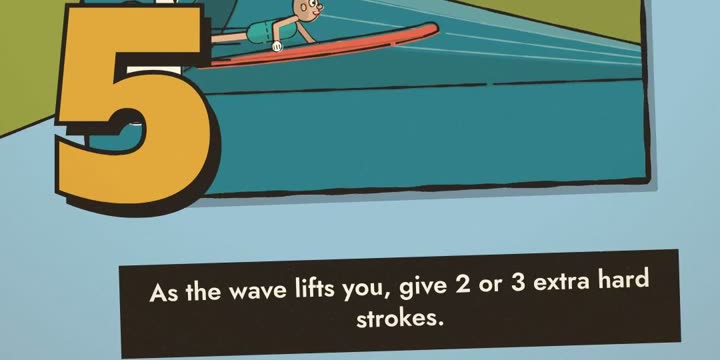
- Extra strokes into the wave. When a wave comes, check that nobody is already riding it or paddling in your path, then turn to face the beach and paddle early. As the wave starts to lift the tail, give two or three extra hard strokes. That is the moment most people stop paddling too soon. Keep going until you feel the board glide on its own.
Beginner tip: Use a big board while you learn. A longboard or soft-top floats higher and paddles faster, so you catch more waves with the same effort.
Finding your spot on the board
Where you lie changes everything. Too far forward and the nose pushes under water, which slows you down and can make you nosedive on a wave. Too far back and the nose sticks up and the tail drags. Find the spot where the board sits flat with the nose just clear of the water. Then note a logo or decal on the deck that lines up with your chin or chest, so you lie in the same place every time.
Common mistakes and fixes
- Head down, chest flat. You can't see waves coming and your stroke is short. Lift your chest a little and look ahead.
- Arching too high. A big cobra arch tires your lower back fast. Lift just enough to see and reach.
- Short, fast strokes. Slow down and reach longer. Pull all the way to your hip.
- Stiff, spread fingers. Keep your fingers relaxed and together, hand slightly cupped.
- Wide, sweeping arms. Keep your hands close to the rails so the pull goes straight back, not out to the side.
- Legs off the sides. Bring your feet together on the board.
- Stopping as the wave arrives. Give two or three extra strokes after you feel the lift. Stop only when the board is gliding.
Land drill
You can build paddling strength out of the water.
- Lie face down on a bench or a bed with your arms free to hang off the edge.
- Lift your chest a little and paddle in slow, long, alternating strokes, reaching forward and pulling back to your hip.
- Do 30 seconds on, 30 seconds rest, five rounds.
- Finish with three short bursts of fast, hard strokes, the strokes that catch the wave.
A pool also works well. Swimming freestyle uses almost the same motion and builds the same shoulders.
Safety note
In winter, swells are often bigger and the water is around 57 to 62 °F. Paddling in a 4/3 mm wetsuit is harder, and cold arms tire faster, so plan shorter sessions until you are fit. Keep enough energy in reserve to paddle back to the beach.
If you are getting pulled away from shore, stay on your board and paddle parallel to the beach out of the current, not straight against it, then head in. If you can't get out, wave one arm and call for help. Read up on rip currents before you go. Days are short in winter too, so plan to be back on the sand well before dark.
FAQ
Why do I get so tired paddling a surfboard?
Usually it is technique and board choice. Short strokes, legs dragging, a flat chest and a board that is too small all cost energy. Paddling also uses muscles most people don't train, so it gets much easier after a few weeks of regular sessions.
Should I kick my feet when I paddle?
No. Keep your feet together on the board and let your arms do the work. Kicking adds drag, splashes and makes the board wobble.
How far forward should I lie on my board?
Far enough that the board lies flat with the nose an inch or two above the water. If the nose goes under, move back. If the nose sticks up and the tail drags, move forward.
How do I paddle into a wave?
Turn toward the beach before the wave reaches you and start paddling early. When you feel the wave lift the tail, give two or three extra hard strokes, then pop up once the board glides. Start in the whitewater, as in catch your first wave.