 Surfology
Home › Learn › Surf technique
How to ride across a wave
On a green wave, riding straight at the beach gets you a few seconds at most. The wave breaks behind you, the whitewater catches up and the ride turns into a foam ride or a wipeout. Angle across the face instead, and you stay in front of the breaking part, on the open water where the wave keeps pushing you. Holding that line is called trimming, and every long ride starts with it.
Pick your direction before you paddle
Look at where the wave is peaking, the part that stands up and breaks first. You go away from it, toward the shoulder, the lower unbroken part to one side. If you're new to these words, our parts of a wave guide has pictures.
A wave that peels to your right as you ride it (facing the beach) is a right, one that peels to your left is a left. If the whole wave stands up in one long line, it's a closeout with no shoulder. Let it go.
Before you commit, check the peak. If another surfer is closer to it and going the same way, the wave is theirs. Our right of way guide explains why.
How to ride across a wave, step by step
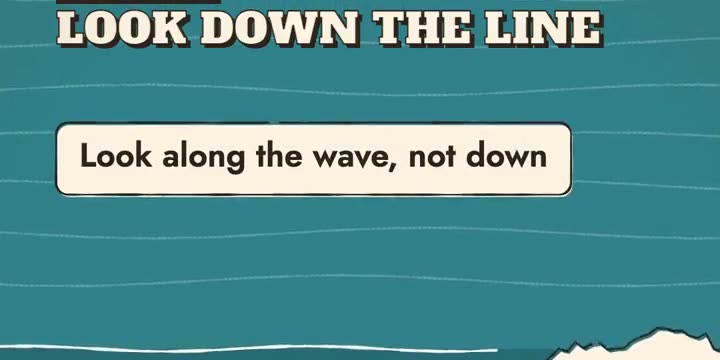
- Look where you want to go. Turn your head and eyes along the wave toward the shoulder as you paddle in, and keep looking there as you pop up. Your shoulders follow your eyes, and the board follows your shoulders. Look down at the nose and you will go straight.
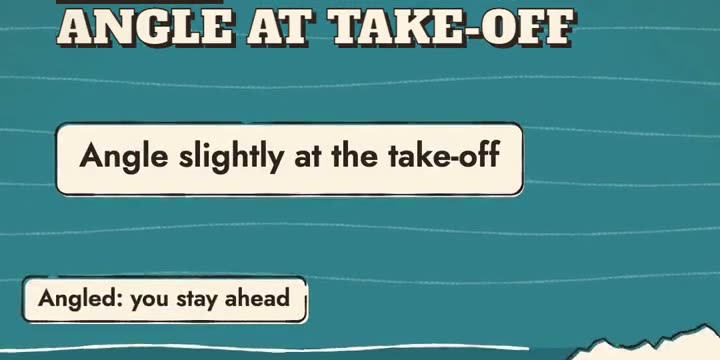
- Angle a little at the take-off. As you paddle in, point the nose slightly toward the shoulder, a small angle, not sideways. On a steep wave this keeps the nose from digging in and gets you moving along the face from the start. Too much angle and the wave rolls under you without picking you up.
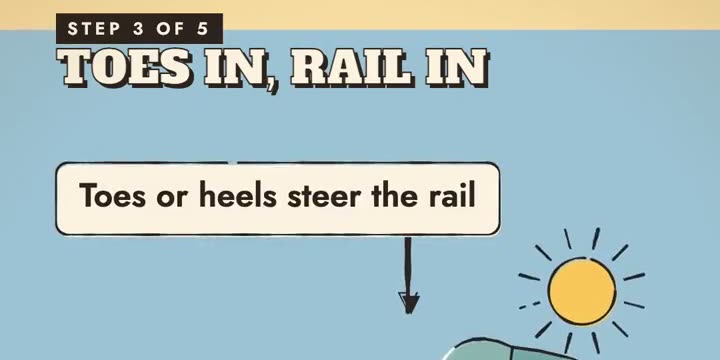
- Steer with your toes or heels. Pressing on your toes tips the board onto the rail in front of your toes, and pressing on your heels sets the rail behind you. The rail bites the water and the board turns that way. Keep your knees bent and your weight centered. Shift a little forward to speed up and a little back to slow down or turn harder.
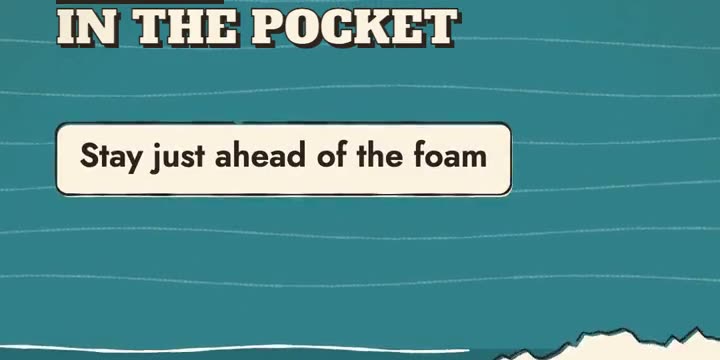
- Stay in the pocket. Ride just ahead of the breaking part, where the face is steepest. If the foam is catching you, angle a bit more toward the shoulder. If you're slowing down out on the flat shoulder and the wave is leaving you, angle back toward the breaking part.
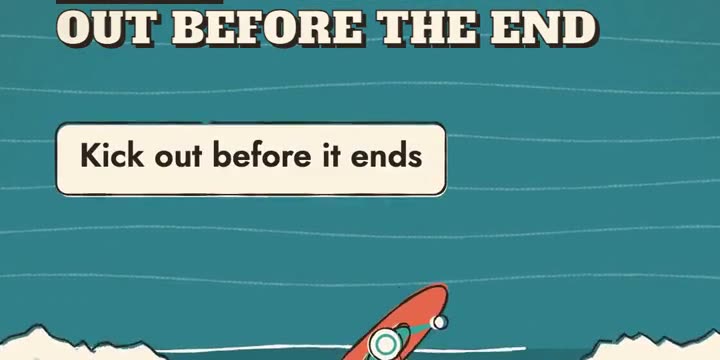
- Kick out before the end. Watch the wave ahead of you. When it starts to close out or you run out of open face, turn up the face and over the back of the wave before it breaks on you. Our kick-out guide covers the exit step by step.
Beginner tip: On small, soft waves you can catch it straight, pop up first and then lean into the turn. Angle at the take-off once the waves get steeper.
Frontside and backside
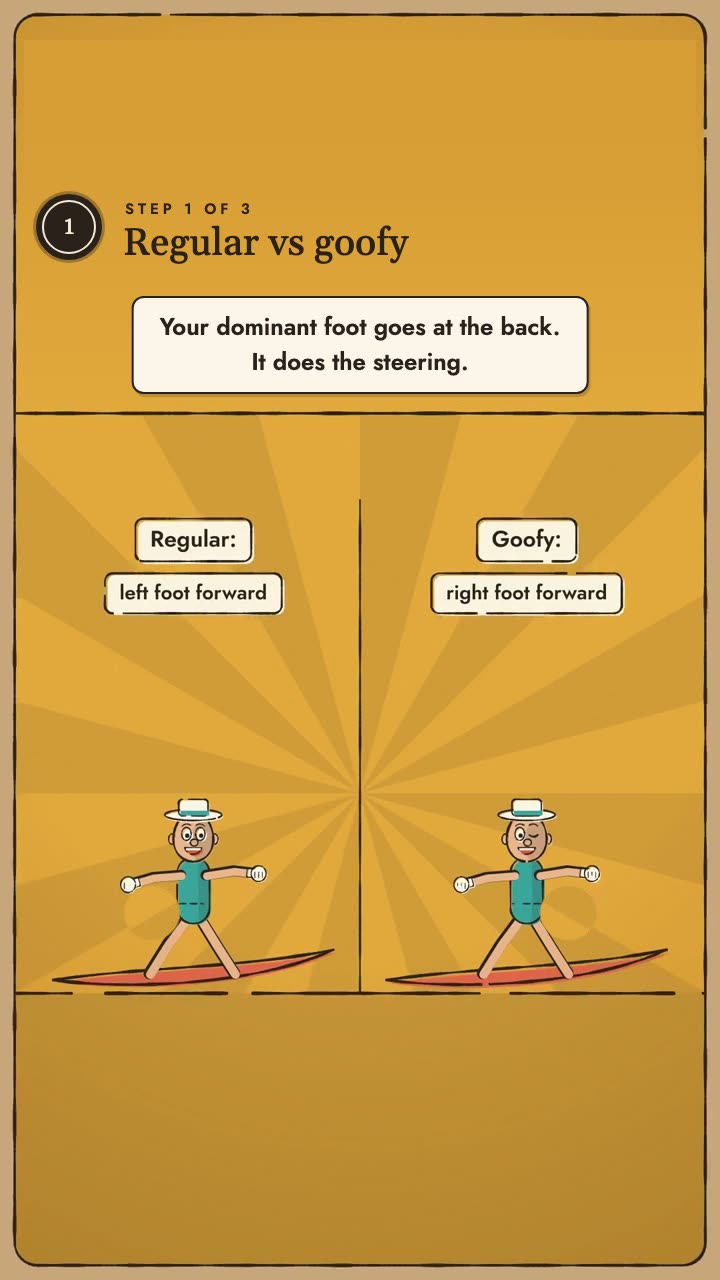
Which way you face depends on your stance and the wave. A regular-footer (left foot forward) faces the wave going right, which is called frontside. Going left, they ride with their back to it, backside. Goofy-footers are the opposite. Frontside is easier because you can see the wave, so many surfers learn to angle that way first. Not sure which you are? Our stance guide has three quick tests.
Common mistakes and fixes
- Looking at your feet. The board goes where your head goes. Look along the wave.
- Turning too late on a steep wave. Going straight down and then turning at the bottom lets the whitewater catch you, or the nose digs in. Set a small angle as you paddle in.
- Too much angle on the take-off. The wave passes under you. Paddle in at a small angle and give two or three extra strokes.
- Standing tall and stiff. Straight legs can't set a rail. Bend your knees and keep your weight low.
- Running away from the wave. Riding far out onto the flat shoulder kills your speed. Stay near the breaking part.
- Not looking ahead. Surfers paddling out often sit right in your path. Keep looking along the wave, steer around them or kick out early.
Land drill
Stand in your surf stance on the sand or the floor, knees bent. Turn your head and shoulders to look along an imaginary wave to your right, then slowly rock your weight onto your toes and back onto your heels, 10 times. Do the same looking left. Then do five slow pop-ups, landing each one with your head already turned toward the shoulder. The look should come first, before your feet land.
Safety note
Always wear a leash. The surfer riding the wave usually has the right of way over surfers paddling out, but it's still your job not to hit anyone. If you can't steer around someone, kick out. Paddling back out, go around the breaking part, not through the line where someone is riding.
In winter, from November to March, SoCal gets bigger northwest and west swells, and many beach breaks close out more. Pick small, slower waves with a clear shoulder while you learn to angle. The water is about 57 to 62 °F, so wear a 4/3 mm wetsuit, and the days are short, so be back on the sand before dark.
FAQ
How do I turn my surfboard to go along the wave?
Look where you want to go first, then put pressure on your toes or heels to tip the board onto its rail. Keep your knees bent. The board turns toward the side you lean on.
Should I angle my board when paddling into a wave?
On steeper green waves, yes, a little. A small angle toward the shoulder keeps the nose from digging in and starts you moving across the face. On small, soft waves you can paddle in straight and turn after you stand up.
What does trimming mean in surfing?
Trimming is riding across the wave on a steady line, just ahead of the breaking part, without big turns. You adjust your speed by moving your weight a little forward or back on the board.
Why do I keep getting caught by the whitewater?
Usually you're going too straight or turning too late, so the wave breaks right behind you. Pick a direction before you paddle, angle slightly at the take-off and stay just ahead of the foam.