 Surfology
Home › Learn › Surf technique
How to read the sets and pick your wave
Waves don't arrive one by one at an even pace. They come in groups, called sets, with quieter spells between them, called lulls. Once you know the rhythm of the day, you stop fighting your way out, you stop getting caught by surprise and you start catching better waves. Reading it takes about 10 minutes on the sand, a stopwatch and a little patience out the back.
What a set is, and why waves come in groups
A set is a group of bigger waves, often three to seven of them, followed by a lull of small or no waves. Then the next set arrives.
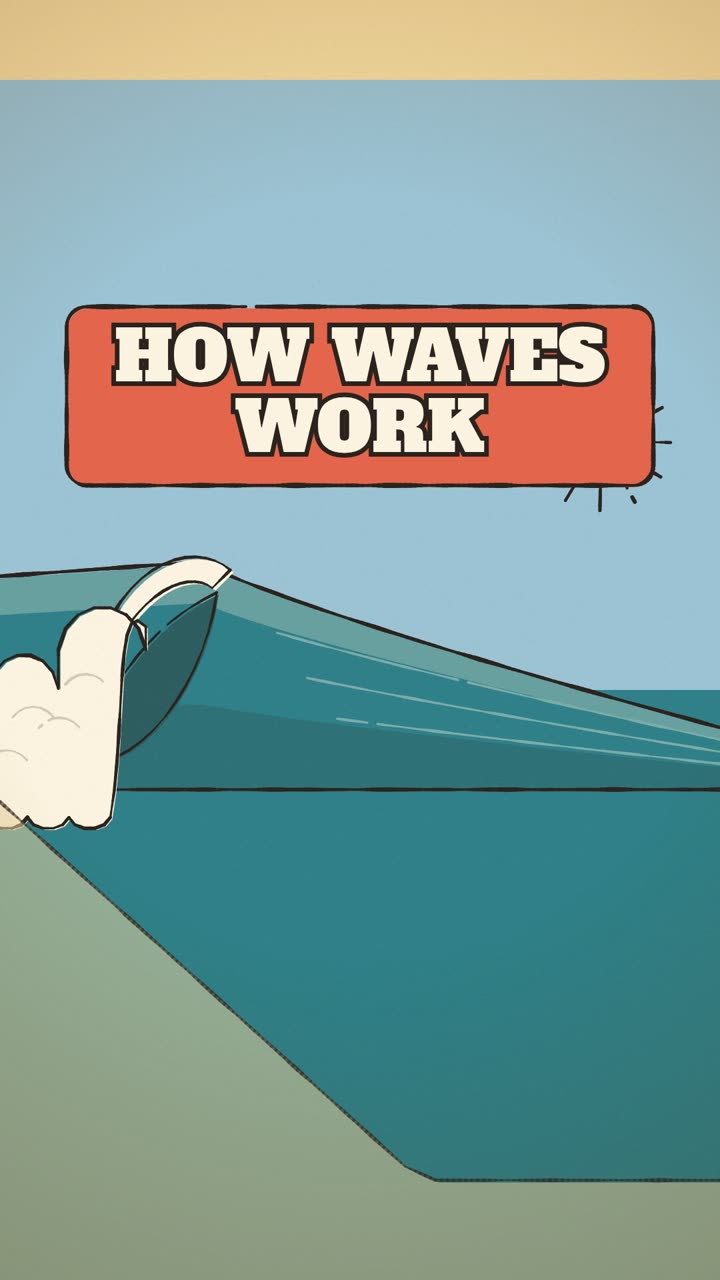
Swell is built by storms far out at sea. Waves of slightly different sizes and speeds travel together, and as they overlap, they add up into groups of bigger waves with smaller ones between. By the time that swell reaches your beach, it shows up as sets and lulls. Long-period groundswell tends to have bigger, more spaced-out sets and longer lulls. Choppy local windswell is more jumbled. Our guide to how waves work explains where swell comes from.
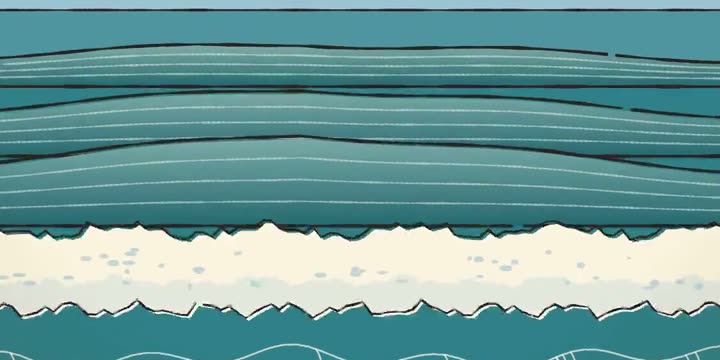
Read the sets from the beach
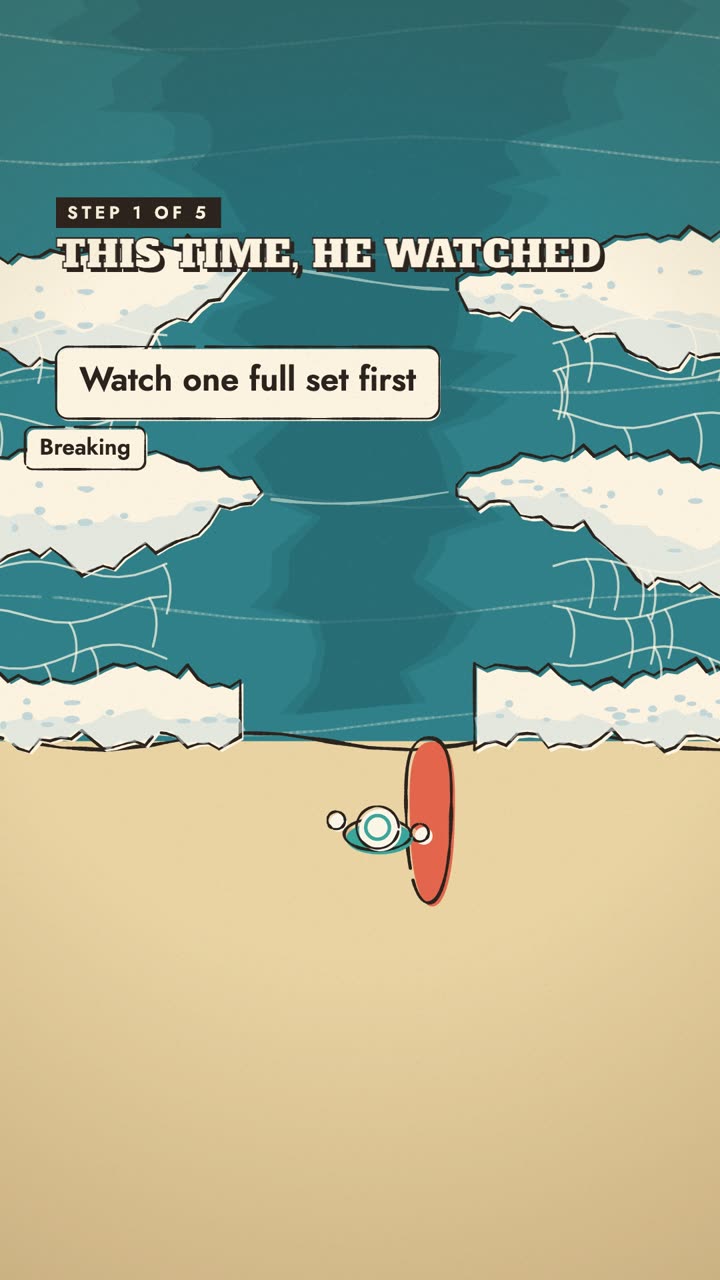
- Watch for about 10 minutes. Before you paddle out, stand on the beach where you can see the whole break.
- Count the waves in each set. Say the number out loud as each wave of the set breaks. After two or three sets you'll know roughly how many to expect that day.
- Time the lulls. Start a stopwatch when the last wave of a set breaks and stop it when the next set shows. Lulls can be under a minute or several minutes.
- Find the biggest waves. Note where the biggest set waves break, and how far out. That is the line you want to paddle around, not into.
Paddle out in the lull
Wait at the water's edge as the last wave of a set breaks, then go. The lull is your window to get out the back with fewer waves to deal with. Paddle hard the whole way: lulls end, and you want to be past the breaking waves before the next set arrives. Our paddle-out guide covers the route.
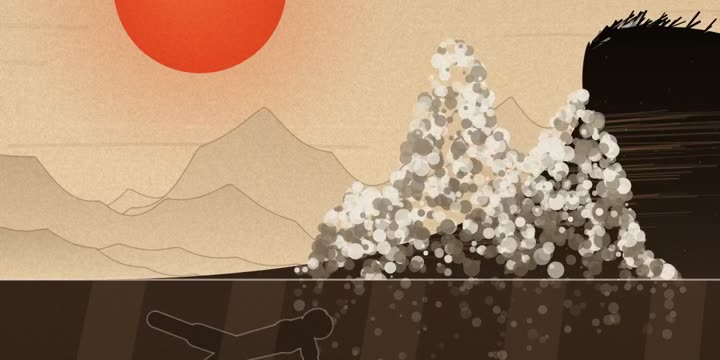
If a set catches you halfway, don't let a wave hit you square on top. On a shortboard, duck dive: paddle hard at it, push the nose under, drive the tail down with your knee or foot and let it roll over you. On a longboard or soft-top, turtle roll instead.
Out the back: pick your wave from the set
- Sit facing the sea. Once you're past the breaking waves, sit up and keep watching the horizon. A set usually shows as dark lines, or bumps, far out.
- Watch the whole set. The biggest wave is often not the first one. It can come in the middle of the set or near the end, so don't relax after the first two.
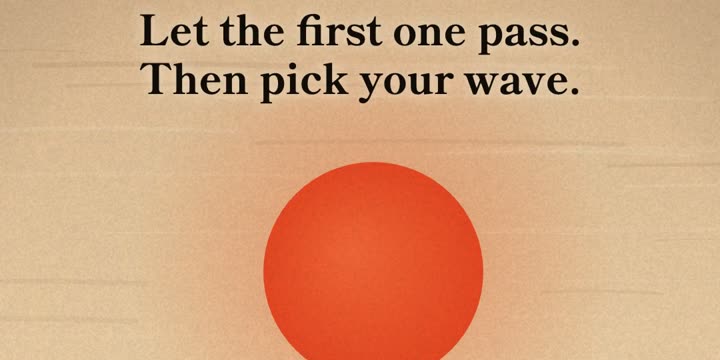
- Let the first one pass. The first wave is often not the best one, and if you take it and fall, the rest of the set lands on your head. Let it go under you, see how the set is shaping up, then pick your wave. Paddle over the ones you don't take, toward the open sea, so a bigger one behind doesn't break on you.
- Turn and go. When your wave comes, turn toward the beach quickly and paddle hard before it reaches you, so you're already moving as it lifts you. Check that nobody closer to the peak is already going; see right of way.
Taking off on a steep set wave
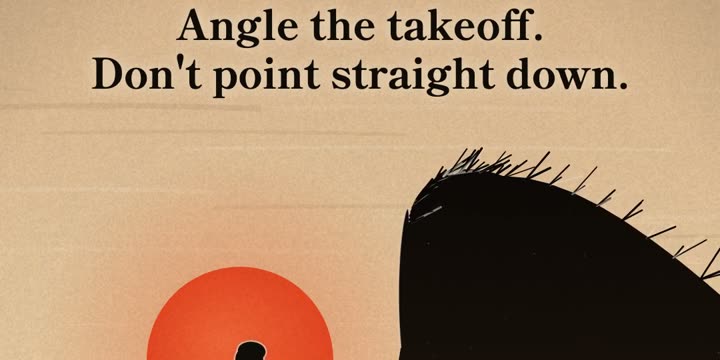
Set waves are bigger and steeper than the ones in the lull. On a steep wave, don't point the board straight down at the beach. Angle it toward the open face, the direction the wave is peeling, as you paddle in and pop up, so you drop down at an angle instead of nose-diving to the bottom. As the wave pitches, keep your knees bent and your weight low and centered. A low body is stable and gives you room under a curling lip. More in our angling guide.
Beginner tip: If you're still catching whitewater on a soft-top, sets matter for you too. Paddle back out in the lulls so you spend less time getting knocked over, and use the smaller waves between sets to practice. Leave steep set waves and duck dives for later.
Common mistakes and fixes
- Running straight in. Ten minutes on the sand tells you how many waves come per set and how long you have to get out.
- Paddling out mid-set. You get hit by wave after wave and burn out. Wait for the last wave, then go.
- Relaxing after the first wave or two. The bigger waves can come late in the set. Count until the set is done.
- Taking the first wave every time. You miss the better waves behind it and get caught inside. Let it pass.
- Sitting with your back to the sea. A set catches you inside. Keep watching the horizon.
- Pointing straight down a steep wave. The nose digs and the lip throws you forward. Angle your takeoff and stay low.
Beach drill
Next time you're at the beach, time the sets before you go out. Use a phone or watch, and for 10 minutes, write down how many waves each set has and how long each lull lasts. Then, in the water, paddle out only in a lull, and count each set as it arrives so you know when the last wave is coming. Do it at the same spot on a few different days and you'll see how the rhythm changes with the swell.
Safety note
Sets can be much bigger than the waves you see during a lull. Watch long enough to see the biggest sets before you decide to paddle out, and if they are too big for you, stay on the beach. If you get caught inside by a set, don't throw your board: a loose board can hit the surfer behind you. Hold it, duck dive or turtle roll, and keep your leash on.
From November to March, SoCal gets bigger northwest and west swells, so sets get bigger and lulls matter more. The water is about 57 to 62 °F, so wear a 4/3 mm wetsuit, and the days are short, so leave time to get back in before dark.
FAQ
What is a set in surfing?
A set is a group of bigger waves that arrive together, often three to seven in a row, followed by a lull, a calmer spell with small or no waves. Sets come from swell built by distant storms.
How long is a lull between sets?
It varies by day and by swell. It can be under a minute or several minutes. The best way to know is to watch and time a few sets from the beach before you paddle out.
Is the last wave of a set the biggest?
Not always, but the biggest wave often comes in the middle or late in the set rather than first. Watch the whole set before you paddle out or pick a wave, so a big one doesn't catch you inside.
Should you take the first wave of a set?
Usually not. The first wave is often not the best one, and if you wipe out on it, the rest of the set breaks on you. Let it pass and pick a wave from later in the set.
When is the best time to paddle out?
During a lull, right after the last wave of a set breaks. You'll face fewer waves and have the best chance to get out the back without getting worn out.