 Surfology
Home › Learn › Surf technique
How to do a floater
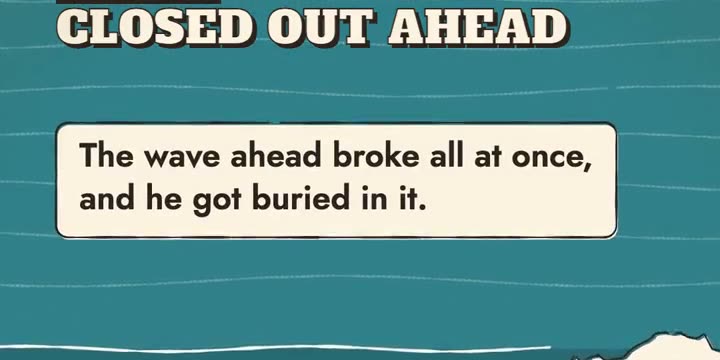
You're riding down the line and the wave ahead of you breaks all at once. You can't get around it, and if you ride into it, the whitewater buries you. The floater takes you over it instead: you ride up onto the breaking part, slide across the top of the foam and drop back down with the lip into the open water ahead. It's an intermediate move, for surfers who already ride across green waves and can turn off the bottom.
Beginner tip: Still learning to ride across the wave? When a section closes ahead of you, kick out over the back. The floater comes later, once angling and turning feel easy.
How to do a floater, step by step
- Read the section early. Keep looking ahead along the wave. When a part ahead stands up and starts to throw all at once, that's a closing section. Decide now: float over it, or kick out.
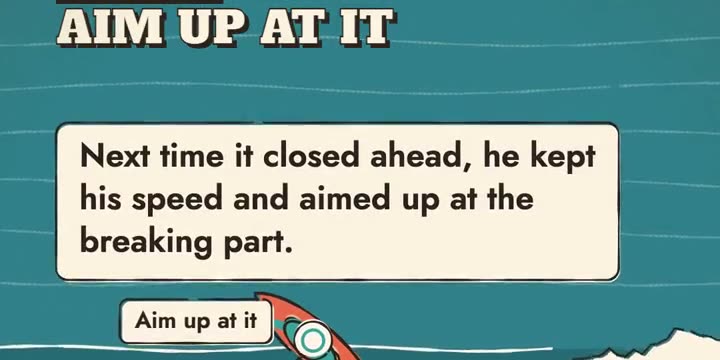
- Keep your speed and aim up at it. Don't slow down to wait for it. Pump if you need speed, then turn off the bottom and aim up at the top of the breaking part, angled forward along the wave, not straight up. Your head and shoulders point where you want to land on top.
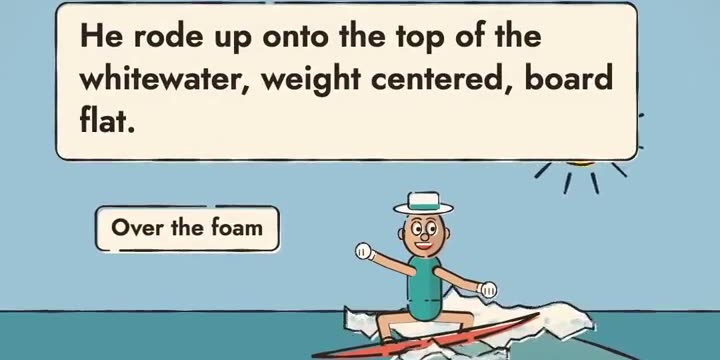
- Ride on top. As the board reaches the lip and the foam, keep your weight centered over the board and the board flat, with no rail digging in. Arms out for balance. Let the board slide across the top of the whitewater.
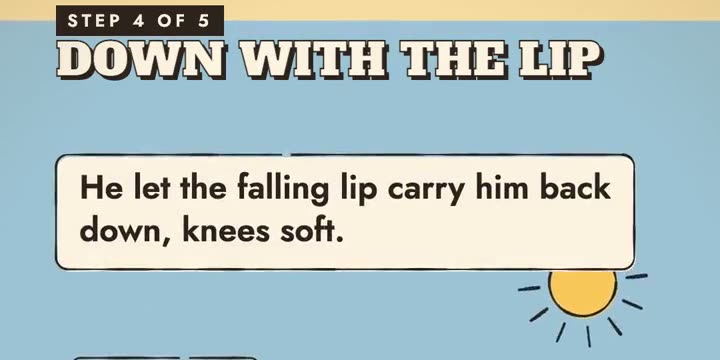
- Come down with the lip. When the section runs out or the lip starts to fall, go with it. Keep your knees soft and let the falling water carry you back down the face. Keep your weight centered to slightly over your front foot, so the board stays under you.
- Land low and ride on. Land in a deep crouch, chest over your knees, and absorb the drop with your legs. Then stand up a little and keep riding into the open face or the flat water ahead of the foam.
Common mistakes and fixes
- Not enough speed. You stall on top of the foam and it swallows you. Keep pumping and go at the section with speed.
- Going too vertical. Aim straight up and you either go over the back or get thrown with the lip. Aim up and forward along the wave.
- Digging a rail on top. A tipped board catches and flips you. Keep it flat while you slide.
- Landing with stiff legs. That jars your knees and ankles and throws you off. Land low, knees soft.
- Landing on your back foot. The board shoots out ahead of you. Keep your weight centered or slightly forward as you come down.
- Floating too far. Riding along the top until the wave drops you into the flats from high up is a hard landing. On your first ones, pick small sections and come down early.
Land drill
Stand in your surf stance on soft sand, arms out. Make a small hop and land in a low crouch with your feet in the same spots, chest over your knees and arms forward. Make the landing quiet: soft knees, no slap. Do 10 reps, then 10 more with a small twist of the shoulders in the air, as if steering down the face. If you have a surfskate, practice riding up a gentle bank, sliding across the top and coming back down low.
Safety note
Floaters land you in the flat water just ahead of the foam, where it is often shallow. Over a shallow sandbar or a reef, a bad landing can put you into the bottom. Learn the move on small days over sand, fall flat if it goes wrong and cover your head, as in our wipeout guide. Always wear a leash, and look ahead before you come down: don't land on someone paddling out.
In winter, from November to March, SoCal gets bigger northwest and west swells, so closing sections are heavier and come down harder. Practice on the smaller days. The water is about 57 to 62 °F, so wear a 4/3 mm wetsuit; cold legs are stiffer, so warm up on the sand before you paddle out.
FAQ
What is a floater in surfing?
A floater is a move where you ride up onto a breaking section of the wave, slide across the top of the whitewater and come back down with the lip. It lets you get past a section that would otherwise close out on you and end your ride.
Can you do a floater on a longboard?
It's possible on small waves, but it's mostly a shortboard and mid-length move. A longboard is long and heavy, so it's hard to get onto the lip and land it. On a longboard, most surfers go around a closing section or kick out.
Why do I fall when landing a floater?
Most falls come from landing with stiff legs or with your weight on the back foot. Bend your knees as you come down, keep your weight centered or slightly forward and land in a deep crouch.
When should I do a floater instead of kicking out?
Float when you have good speed and the section ahead is small enough to ride over, with open wave or flat water beyond it. If you're slow, the section is big or someone is paddling out where you'd land, kick out.