 Surfology
Home › Learn › Local surf news › North Shore
Pipeline in 48 hours: how a winter swell arrives
A storm thousands of miles away can turn a small Saturday on Oahu's North Shore into a giant Sunday at Pipeline. On Oct 30, 2026, forecasters expected exactly that for the weekend of Oct 31. That forecast is long past, but how a winter swell is built still holds, and it helps you read a forecast in Hawaii or here in SoCal.
The forecast, as of Oct 30, 2026
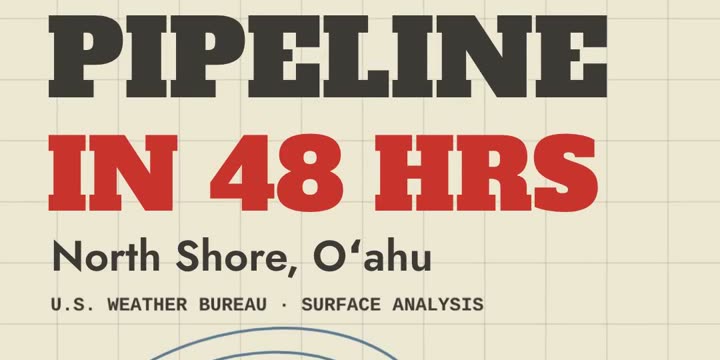
- A North Pacific storm was building a long-period groundswell, with periods of about 13 to 20 seconds.
- The swell had about 2,000 miles to travel to Oahu.
- The National Weather Service forecast it to arrive late Saturday, Oct 31.
- The NWS forecast surf above advisory level for Sunday, Nov 1, into Monday.
For any trip, check a current forecast.
How a storm becomes surf
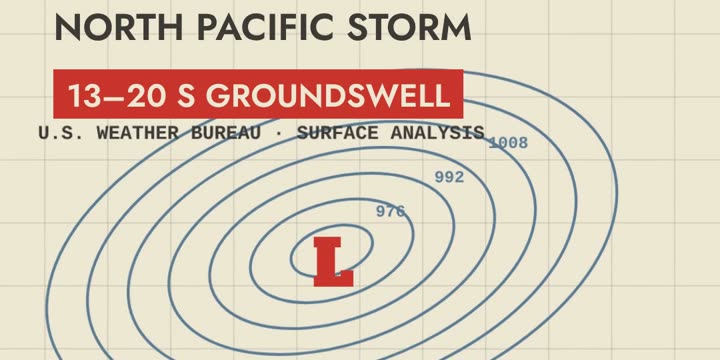
- Storm winds build a long swell. Strong winds blowing over a long stretch of ocean for a long time make waves that grow, organize and spread out. The longer the period (seconds between waves), the more energy each wave carries.
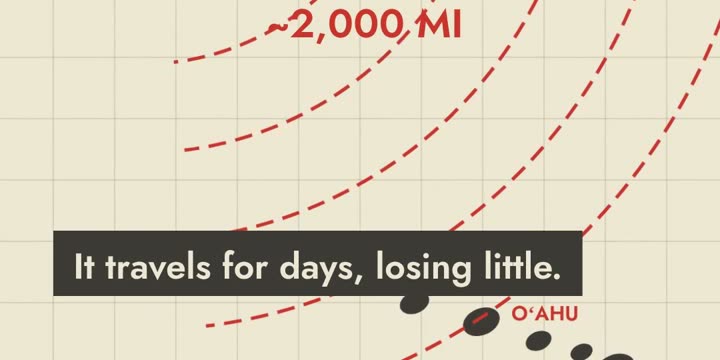
- It travels for days, losing little. Long-period groundswell moves across open ocean with little energy loss. That is why a swell can cross about 2,000 miles and still arrive strong. Out at sea it is just a long, low hump you would barely notice.
- A shallow reef makes it stand up. When that deep-water energy hits shallow reef, the wave slows at the bottom, grows tall and pitches forward. That is what makes Pipeline a heavy, hollow wave.

What it means for a SoCal surfer
- Watch the period, not just the height. A 3 ft swell at 16 seconds can show up much bigger on the sand than a 3 ft swell at 8 seconds. Long period means more power and bigger sets.
- Expect a swell to show up fast. Long-period swells often arrive in a jump, with the first sets coming before the forecast peak. A quiet morning can turn by afternoon.
- The bottom shapes the wave. A shallow reef or point makes swell stand up fast and steep in the same spot every time. Sandbars shift from week to week, and deep canyons offshore can focus swell on one beach. The same swell can be mellow at one spot and heavy at the next.
- Sets come with long lulls. On a groundswell, you may wait several minutes and then see a set much bigger than anything before. Count sets before you paddle out.
Beginner tip: On a big long-period swell, pick a sheltered beach break, stay in the whitewater, and sit on the sand for 15 minutes first to see the biggest sets.
Winter note
November through March is winter in SoCal. Water is about 57 to 62 °F, a 4/3 mm wetsuit is standard (booties optional), days are shorter, and the bigger northwest and west swells arrive. Many of those swells come from the same kind of North Pacific storms that light up the North Shore. Learning to read period and direction will help you all winter.
Safety note
Winter North Shore is for experts, and spectators sit well back on the sand. Big long-period surf brings strong currents, sudden sets and powerful shorebreak. If you travel to Oahu in winter, watch the big days from the beach. Beginners belong on the south shore, which is gentler at that time of year. At home, the same rules apply on big swell days: if you are not sure, don't go out.

FAQ
Why does the North Shore get so big in winter?
North Pacific storms build long-period groundswell in winter. That swell travels a long way with little energy loss, then stands up on shallow reefs like Pipeline. The result can be huge surf after a small day.
What does a 13 to 20 second swell period mean?
It is the time between waves in a swell. Longer periods mean the swell came from a strong, distant storm and carries more energy, so waves break bigger and more powerfully than the height alone suggests.
Where should beginners surf on Oahu in winter?
The south shore, which stays gentler when the North Shore is big. Watch winter North Shore surf from the sand.
What is a groundswell?
A groundswell is a long-period swell built by strong storm winds blowing over a long stretch of ocean far away. It travels across open ocean with little energy loss, so it can cross about 2,000 miles and still arrive strong.