 Surfology
Home › Learn › Surf technique
How to duck dive a surfboard
A duck dive takes your whole board under a breaking wave, so the whitewater rolls over the top instead of shoving you back toward the beach. It works on a shortboard or another low-volume board, which floats little enough to sink. It is the move for foam and waves too big to push up over, and once it clicks, getting out the back costs far less energy.
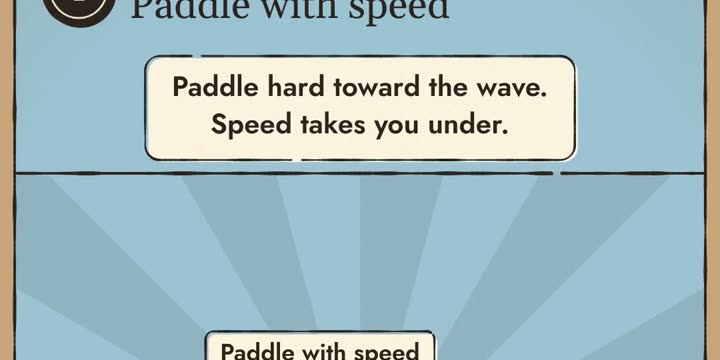
How to duck dive, step by step
- Paddle with speed. Paddle hard, straight at the wave, with the nose pointing right at it. Speed is what carries you under, so don't slow down as it gets close.
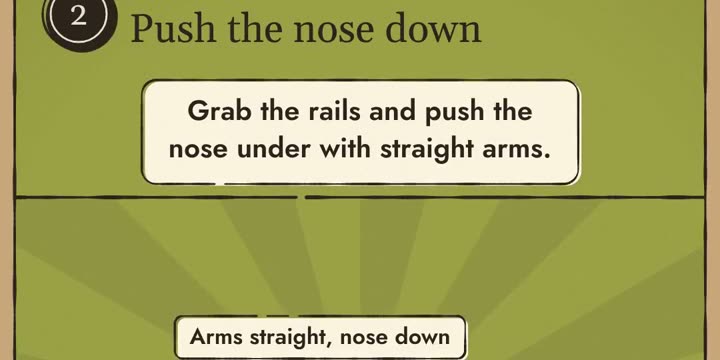
- Push the nose down. About a board length or two before the foam reaches you, grab the rails around your chest or shoulders and push the nose under with straight arms, leaning your weight forward.
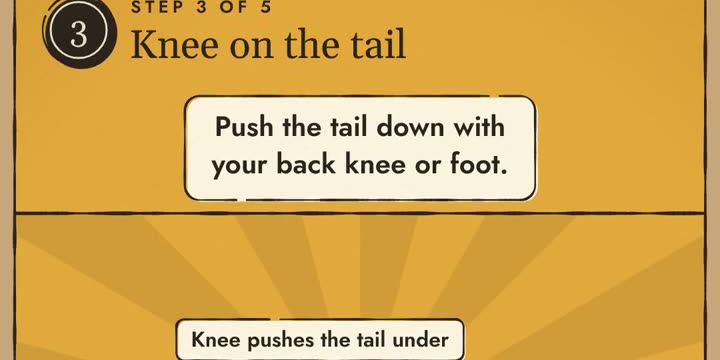
- Drive the tail down. As the nose goes under, push the tail down with your back knee or foot, so the whole board sinks, not just the front. Push only the nose and the board swings up and the wave takes you with it.
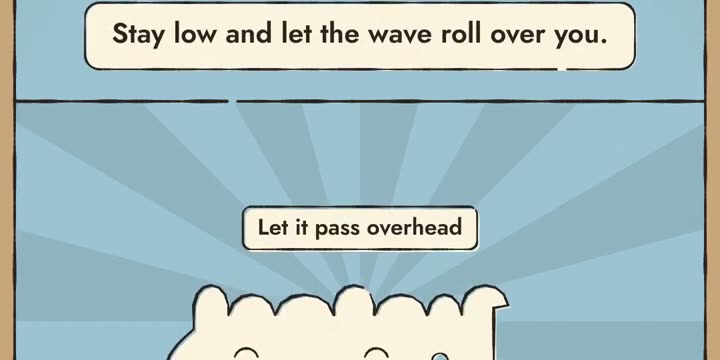
- Stay low and let it pass. Bring your chest and head down close to the board and hold on as the whitewater rolls over. In deep enough water, the deeper you go, the less turbulence reaches you.
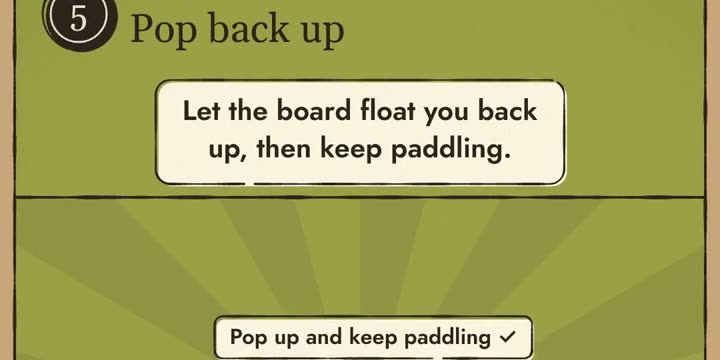
- Come back up and paddle. As the pull eases, tilt the nose up a little and let the board float you to the surface. Start paddling straight away, because there is usually another wave behind it.
Which boards can duck dive?
The duck dive gets harder the more your board floats. A shortboard goes under well. On a mid-length or a fish you'll only get partly under, and on a longboard or soft-top it won't work at all. For those, use the turtle roll: flip under the board and let the foam pass over its bottom. For small foam on any board, a quick push-up over it is enough; our paddle-out guide covers that and how to pick your route out.
Beginner tip: If you're learning on a soft-top or longboard, skip the duck dive for now. Learn the push-up and the turtle roll, and come back to it when you move to a smaller board.
Common mistakes and fixes
- No speed. A slow board won't sink. Keep paddling hard right up to the push.
- Going too early. You're back on the surface before the wave arrives. Push the nose down about a board length or two before the foam.
- Going too late. The foam hits you mid-move and takes you with it. Commit a moment earlier.
- Only pushing the nose. The board swings up like a seesaw. Drive the tail down with your knee or foot so the whole board goes under.
- Meeting the wave at an angle. The wave catches the rail and twists the board. Line up straight every time.
- Lifting your head. Your body acts like a sail in the turbulence. Keep your chest and head close to the board.
- Resting after you come up. Paddle straight away. The next wave in the set is coming.
Practice drill
You can't sink a board on sand, so practice in flat, chest-deep water on a calm day, or in a pool where boards are allowed. Paddle a few strokes, push the nose under, drive the tail down with your knee and try to get the whole board level under the surface before it floats you back up. Do 10 rounds. Then try it on small whitewater before you need it on a bigger day. Build the paddling speed it needs with our paddling guide.
Safety note
Always wear a leash and check it before every session. Look behind you before you dive: if a surfer is close behind and the wave rips your board away, it could hit them. Over a shallow sandbar or reef, don't drive deep, and keep your head close to the board so it can't pop back into your face. If the waves are far too big to hold on, they are too big for you that day. Learn what to do if you lose your board in our wipeout guide.
In winter, from November to March, SoCal often gets bigger west and northwest swells, so you'll duck dive more often and deeper. The water is about 57 to 62 °F, so wear a 4/3 mm wetsuit; a hood helps if the cold water on your head bothers you. Cold arms tire faster, and the days are short, so plan to be back on the beach before dark.
FAQ
Can you duck dive a longboard?
No, not really. A longboard or soft-top has too much float to push under a wave. Use the turtle roll instead: flip under the board, hold the nose down a little and let the whitewater pass over the bottom.
How do I duck dive deeper?
Paddle in with more speed, push the nose down with straight arms, then drive the tail down hard with your knee or foot so the whole board sinks. Stay low and close to the board until the wave passes. A board with less volume also goes deeper.
When should I start the duck dive?
Push the nose down when the whitewater is about a board length or two away. Too early and you float back up before it arrives; too late and it hits you mid-move.
Why does my board pop back up when I duck dive?
Usually you pushed only the nose. The tail stays up, the board swings back to the surface and the wave takes you with it. Drive the tail down with your back knee or foot right after the nose goes under.